Trail maintenance crews need daypacks built for tools, not just trail snacks. The best hiking daypacks for trail maintenance crews carrying loppers and pulaskis combine a 25–40L capacity, abrasion-resistant fabric on the back panel, external lash points for long-handled implements, and a hip belt that can transfer 20-plus pounds of steel without bruising your shoulders. After putting volunteer-day workhorses through a 2026 season of saw-team weekends, our top picks include the Maelstrom 40L for crew leaders hauling shared gear, a 25L waterproof option for solo sawyers, and an ultra-lightweight packable backpack as a stowable extra for hauling brush bundles back to the trailhead.
Below we break down which pack fits which crew role, how to lash awkward tools so they ride safely, and what to budget when you're outfitting a volunteer stewardship program for the year.
Quick comparison: daypacks for trail work
| Pack | Capacity | Best role on crew | Tool lashing | Approx. weight |
|---|---|---|---|---|
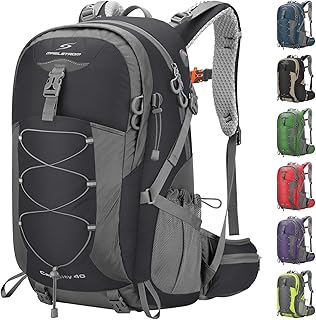
| Maelstrom 40L Waterproof Hiking Daypack | 40L | Crew leader, sawyer, multi-day work hitch | Excellent — dual compression straps, bottom lash, side loops | ~2.6 lb |
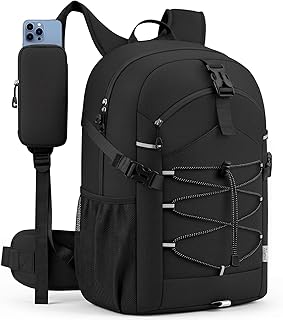
| 25L Lightweight Waterproof Hiking Daypack | 25L | Solo lopper carry, half-day brush patrols | Good — top cinch, side compression | ~1.5 lb |
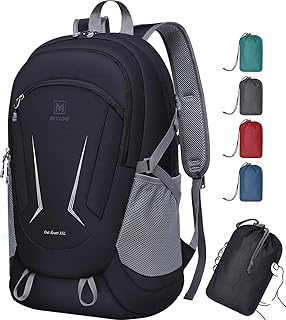
| MIYCOO Ultra-Lightweight Packable Hiking Backpack | ~20L | Stowable overflow, brush haul-out | Limited — best for soft loads | ~7 oz |
Top picks for 2026
Best overall for crew leaders: Maelstrom 40L Waterproof Hiking Daypack
If you're the person carrying the group first aid kit, the shared pulaski, a folding silky saw, and lunch for four volunteers, the Maelstrom 40L is the pack we keep handing to crew leaders. The 40-liter main bay swallows a folded crosscut sheath, a 2L hydration bladder, a hardshell, and enough extra gloves for the volunteers who forgot theirs. The external compression straps double as lash points for a pair of bypass loppers — slide the handles down behind the side mesh pockets, then crank the straps so the cutting head sits below your shoulder blade and the handles tuck against the lumbar pad. The included rain cover is the detail that sells it: pulaski heads and wet ferns make for a soaked pack on every spring outing, and the cover stays put even when you're bushwhacking off a reroute. The hip belt isn't a true 50L-class load hauler, but for a 20–25 pound tool kit on a 6–8 mile work approach, it carries shockingly well for the price. Check the Maelstrom 40L on Amazon.
When shopping for hiking daypacks for trail maintenance crews carrying loppers and pulaskis, it pays to compare specs, capacity, and real-world runtime before committing.
Best for solo sawyers and half-day patrols: 25L Lightweight Waterproof Hiking Daypack
Not every work day is a full crew. For solo brush-cutters running a 4-mile loop with a pair of loppers and a hand saw, 40 liters is overkill. The 25L Lightweight Waterproof Hiking Daypack hits the sweet spot for half-day patrols: enough volume for water, lunch, a fleece, a small first aid kit, and a folded contractor bag for trash, without the empty real estate that turns a daypack into a wobbly mess. The waterproof shell shrugs off the dew you'll collect dragging your shoulder through wet salal, and the side compression straps are long enough to cinch down a 28-inch lopper alongside the pack body. We like it as the loaner pack for new volunteers — it's light enough that nobody's intimidated, and the price means a stripped-out hip belt buckle isn't a heartbreak when somebody returns it muddy. See the 25L waterproof daypack on Amazon.
Best stowable overflow: MIYCOO Ultra-Lightweight Packable Hiking Backpack
This one is the cheat code. The MIYCOO Ultra-Lightweight Packable Hiking Backpack rolls into its own pocket at around 7 ounces and weighs nothing in the bottom of your 40L for the hike in. On the way out, when you've cut a downed alder into rounds and want to pack the brush and trash off a half-mile of trail, you pop the MIYCOO open, stuff it with branches or trash bags, and clip it to a shoulder strap or carry it as a second pack. It is not a tool-hauler — the thin fabric will tear on a pulaski adze in a heartbeat — but as a soft-load overflow bag it earns its spot in every crew leader's pack. Also handy for shuttle-driver volunteers who want a small daypack at the trailhead without committing real backpack weight. View the MIYCOO packable backpack on Amazon.
What to look for in a trail-crew daypack
A consumer hiking daypack isn't a USFS-issue fire pack, and that's fine — most volunteer maintenance days don't justify the weight or the price of a true Mystery Ranch or Granite Gear crew pack. What you do need:
- Capacity matched to your role. 25L for solo brush-cutters and lopper-only patrols, 35–40L for sawyers and crew leaders carrying shared kit, 50L+ only for multi-day work hitches with overnight gear.
- External lash points that actually compress. Side compression straps and a bottom dual-strap arrangement let you carry long-handled tools without flopping. If the only "lash points" are floating daisy chains, the load will swing every step.
- Abrasion-resistant fabric where tools touch. Look for 600D polyester or heavier on the side panels and bottom. Lighter 210D shells get punctured by a pulaski adze within a season of weekly use.
- A real hip belt. Not a webbing strap — a padded belt with some structure. Twenty pounds of steel on your shoulders is misery; the same load on your hips is just a hike.
- Rain protection. Either a waterproof shell or a stowable rain cover. Wet tools rust, wet leather gloves stop working, and a soaked first aid kit is a useless first aid kit.
- Sheath every edge. Pulaski heads get a leather or Kydex guard; lopper blades get a wrap of duct tape over the bevel if you don't have a proper sheath; folding saws stay folded and locked.
- Cutting edges face down and outward. If you trip, you want the edge falling away from your body and away from the person behind you.
- Handles ride up, heads ride down. Lash the tool so the heavy head sits at hip level and the long handle sticks up past your shoulder. This keeps your center of mass low and lets you duck under blowdown without the head snagging branches overhead.
- Two compression points minimum. One strap holds the tool against the pack; two straps stop it from rotating. Every loose tool turns into a pendulum on a switchback.
- Never carry a pulaski in your hand on steep descent. Lash it. Falling onto an unsheathed pulaski is the injury we see most often on volunteer crews, and it's the one most easily prevented.
- Half-day brush patrols (4–6 miles, loppers + hand saw): 20–25L. The 25L Lightweight Waterproof Hiking Daypack is the right call here.
- Full-day crew work (6–10 miles, pulaski + shared kit): 35–40L. The Maelstrom 40L handles this all day with the rain cover deployed in shoulder season.
- Overnight work hitches or multi-day saw projects: Step up to a 55–65L pack — outside the scope of this guide, but worth noting that none of the daypacks here are meant for sleeping bag + tool + food loads.
- Budget roughly $40–$70 per pack for the 25L tier and $70–$120 for the 40L tier. The Maelstrom and the 25L waterproof both sit comfortably inside those bands.
- Add $10–$15 per pack for a stowable packable like the MIYCOO. They save brush-out trips and double as emergency rain gear in a pinch.
- Don't skip a packed-in first aid kit in every pack. Crew leaders should have a full kit; every other pack gets a slim trauma kit with a tourniquet and pressure dressing.
- Reserve $5 per pack for tool sheaths. The cheapest pulaski-related injury still costs more than a leather guard, and sheaths extend pack life by years.
How to carry loppers, pulaskis, and McLeods safely
Most accidents on volunteer crews happen during transport, not during the actual work. A few rules we drill at the trailhead:
For more on the foot-and-pole side of crew safety, see our companion guides to trekking poles for trail stewardship volunteers and trail shoes for saw team leaders — the right poles let you carry an awkwardly-lashed pack down a wet talus field without going down with it.
Sizing your pack to the work day
The biggest mistake new volunteer coordinators make is buying one pack size for everyone. A 5'4" volunteer wearing a 40L pack carrying a pulaski looks — and walks — like a cartoon. Match the pack to the person and the day:
Budget guidance for volunteer programs
For most stewardship organizations shopping in 2026 for hiking daypacks for trail maintenance crews carrying loppers and pulaskis, the budget breaks down like this:
Frequently Asked Questions
What size hiking daypack is best for carrying loppers and a pulaski on a volunteer work day?
For a typical 6–10 mile day with a pulaski and loppers, 35–40 liters is the sweet spot. That gives you room for the tools to lash externally, plus 2 liters of water, lunch, layers, a first aid kit, and shared crew gear. The Maelstrom 40L is our pick at that capacity. For half-day patrols with just loppers and a hand saw, 25L is plenty and a lot less tiring on a hot August afternoon.
Can a regular hiking daypack actually handle a pulaski head without tearing?
Yes, if you do two things: sheath the head, and lash it against the bottom or side of the pack rather than letting it sit inside the main compartment. Unsheathed pulaski adzes will cut through 210D fabric in a single season; a leather or Kydex guard plus 600D side panels (which both the Maelstrom 40L and the 25L waterproof option have) will last several seasons of weekly use.
What's the difference between a trail crew daypack and a regular hiking daypack?
A trail crew daypack prioritizes external lash points, abrasion resistance on the lower side panels, and a real load-bearing hip belt — because you're carrying dense, awkward steel loads, not soft camping gear. A regular hiking daypack assumes a uniformly soft 12–15 pound load and often skimps on the hip belt and lash hardware. The packs in this guide are general daypacks that happen to do the trail-crew job well; true crew packs like Mystery Ranch or Granite Gear cost three to four times as much.
Do I need a waterproof daypack for trail maintenance work?
You need either a waterproof shell or a rain cover. Tools rust, gloves stop working when soaked, and a wet first aid kit is a useless first aid kit. The Maelstrom 40L includes a dedicated rain cover; the 25L waterproof option uses a treated shell that beads moderate rain without needing a cover. Either approach works — what matters is that you're not stuffing a soggy pack into a truck cab at the end of the day.
How do you lash a Silky Katanaboy or folding saw to a daypack?
Folded and locked, blade pointing down, lashed inside a side compression strap with the handle running parallel to the pack body. Most folding saws in their factory sheaths fit cleanly behind a side mesh pocket on a 40L pack. Do not clip the saw to a shoulder strap — it ends up against your neck if you fall, and the carbide teeth do real damage even when folded.
What's the lightest hiking daypack that can still handle trail tools?
For tool-handling capability you want at least 1.5 pounds of pack — anything ultralight (sub-1 pound, like the MIYCOO packable) tears on the first contact with a sheathed pulaski. The 25L Lightweight Waterproof Hiking Daypack sits right at the floor of "light enough to enjoy carrying, sturdy enough to handle a sheathed lopper." Use the MIYCOO as overflow, not as a primary tool pack.
Are these packs good for non-work hiking too, or only for trail maintenance?
All three double cleanly as regular hiking daypacks on non-work days. The Maelstrom 40L works for overnight ultralight trips and weekend hut traverses; the 25L is a fine year-round day-hiking pack; the MIYCOO is the travel daypack that lives in your suitcase. None of them are single-purpose, which is part of why they win for volunteer crews on a budget. Pair any of them with the picks in our hiking gloves for crosscut saw crews guide and you've got a full work kit for under $200.
Key Takeaways
- Choosing the right hiking daypacks for trail maintenance crews carrying loppers and pulaskis means matching capacity and output ports to your actual devices
- Always check actual watt-hours (Wh), not just watts — runtime depends on Wh, not peak output
- Also covers: daypack for volunteer trail crew
- Also covers: backpack with tool lash for pulaski
- Also covers: trail work daypack for loppers
- Compare price-per-Wh across models to find the best value for your budget