Selecting the best trekking poles for amputees with prosthetic legs on uneven terrain in 2026 means prioritizing three things: aggressive shock absorption to spare the residual limb and socket interface, secure locking mechanisms that will not slip under sudden weight shifts, and interchangeable tips that grip rock, mud, scree, and snow with equal confidence. Below-knee (BK) and above-knee (AK) amputees both gain meaningful stability, energy return, and a wider hiking envelope from a properly sized pole pair — clinical gait studies show poles can offload 20–30% of bodyweight from the lower limbs during descents. This guide breaks down which features matter, how to size correctly for a prosthetic gait, recommends pairing gear, and answers the long-tail questions amputee hikers actually ask.
Why trekking poles matter more for amputee hikers
For ambulatory amputees moving over uneven ground, trekking poles are not optional fitness accessories — they are a load-distribution system. Even a microprocessor prosthetic foot cannot replicate the proprioceptive feedback or rapid ankle inversion correction of a biological foot. When the prosthetic side meets an unexpected rock, root, or soft patch, the user has milliseconds to react with the contralateral limb and their core. Poles add two additional points of contact that translate that reaction window into a controlled three- or four-point gait.
Real-world benefits prosthetic hikers consistently report:
- Socket interface relief: 15–25% reduction in vertical load on the residual limb during descents, which directly reduces socket bruising and end-of-day pistoning.
- Lateral stability on off-camber trail: where side-hilling would normally force micro-corrections from the sound side, poles convert lateral wobble into vertical force.
- Energy banking on climbs: upper-body push-off offsets the additional metabolic cost most prosthetic users experience (often 20–60% higher than non-amputee peers).
- Stumble recovery: a planted pole gives an extra fraction of a second to recover from a misstep before the residual limb absorbs a fall.
Critical features to look for in 2026
Anti-shock spring systems
The single most important feature for prosthetic users. Internal springs (typically 25–50 mm of compression travel) absorb the high-frequency impact pulses that would otherwise transmit through the wrist, shoulder, and — via the asymmetric loading pattern most amputees use — back into the residual limb. Look for poles with switchable anti-shock so you can lock the spring on level ground (where bounce wastes energy) and engage it on descents and rocky terrain. Brands worth searching for in 2026 include Leki, Black Diamond, Komperdell, and Mountain King; all offer dedicated anti-shock models at the top of their trekking lines.
Locking mechanism: external lever vs twist
External lever locks (FlickLock, SpeedLock, EVO-style) are categorically better for amputees. They cannot fail silently. A twist lock that slips mid-stride on a descent means a pole that suddenly collapses 4–6 inches and a user catching their full body weight on a partial pole and a prosthetic foot — a fall vector. Lever locks visibly indicate engagement and can be cinched harder with gloves on.
Grip material and palm support
Cork and dense EVA foam grips beat rubber for sweat management on long days. Because amputee hikers tend to load poles more heavily — and therefore grip harder — extended foam sleeves below the main grip allow rapid choke-up on side-hill traverses without re-adjusting pole length. Padded straps that load through the wrist (not the palm) are essential; you should be able to release the grip entirely on flats and let the strap carry the pole.
Weight per pole
Carbon poles run 7–9 oz each; aluminum runs 10–12 oz. For AK amputees with limited residual energy budgets, the carbon savings matter more than they would for an able-bodied hiker. The trade-off: carbon shatters under lateral load (a fall onto a pole) where aluminum bends. If your hiking style includes scrambling or rough rocky terrain, aluminum's failure mode is safer.
Tip system
The tip that ships from the factory is rarely the right tip for your terrain. A proper 2026 pole purchase includes carbide tungsten tips for ice and rock, rubber boot tips for dry rock and pavement, small baskets for general trail, and large snow baskets if you'll see winter use. Tips should swap without tools.
Adjustability range
Standard telescoping poles span roughly 65–135 cm. Prosthetic users need the full upper range because (1) descent length should be 8–12 cm longer than climbing length, and (2) some users find that slightly longer poles on the prosthetic side compensate for residual limb-length differences in gait. Three-section telescoping poles (vs Z-fold) give finer adjustment and survive more abuse.
Pole sizing for prosthetic users
The standard fitting rule — pole grip at elbow with forearm parallel to ground when standing on level surface — is the right starting point but not the finish line. From there:
- For long descents: add 5–10 cm so the pole plants downhill without forcing you to lean forward over the prosthetic foot.
- For sustained climbs: subtract 5–8 cm so the plant pushes you up rather than back.
- For BK amputees: standard symmetric sizing usually works.
- For AK amputees: consider 2–3 cm longer on the prosthetic side to compensate for hip-hike during swing phase.
- For bilateral amputees: shorter poles overall, maximum shock absorption, lever locks only.
For a deeper dive into stride mechanics vs other mobility aids, our trekking poles vs walking sticks comparison for amputees walks through which terrain favors which tool.
Recommended complementary gear: low-weight hiking daypacks
Poles fail to deliver their full benefit if your pack pulls you off-balance. For amputee hikers, daypack weight and balance is gear-critical: heavy or top-loaded packs raise the center of mass and make the lateral stability that trekking poles for amputees with prosthetic legs are supposed to provide work much harder. The three packs below pair well with the pole features above — all are lightweight, fit small-to-medium torsos, and balance cleanly when loaded under 15 lbs. All include sternum straps and side compression that keep the load close to the spine.
| Pack | Capacity | Empty weight | Waterproof | Best for |
|---|---|---|---|---|
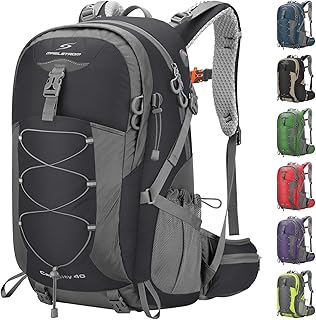
| Maelstrom 40L | 40 L | ~1.7 lb | Yes + rain cover | Full-day and overnight |
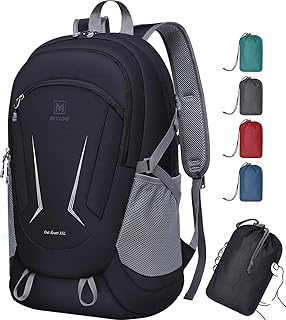
| 25L Lightweight Waterproof | 25 L | ~1.2 lb | Yes | Day hikes 4–8 hr |
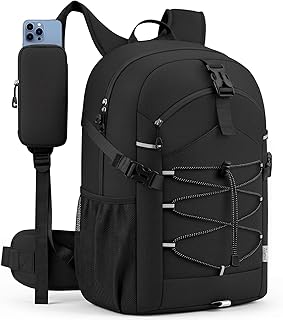
| MIYCOO Packable | ~20 L | ~0.4 lb | Water-resistant | Stowable summit / emergency pack |
Maelstrom 40L Waterproof Hiking Daypack with Rain Cover
The Maelstrom 40L is the right pack for amputee hikers doing full-day or two-day trips where you need to carry a spare liner, prosthetic socks, anti-chafe balm, water, and shells. The included rain cover matters because once a residual limb's socket interface gets wet, you've lost your bailout-dry option. Multiple compression straps let you cinch the load tight to your back — critical when poles need to swing freely without a pack pulling your shoulders down. Check the current Maelstrom 40L price on Amazon.
25L Lightweight Waterproof Hiking Daypack
For shorter trail days — 4 to 8 hours, summer conditions, low elevation gain — 25 L is the sweet spot. There's room for 2 L of water, lunch, a layer, a small first-aid kit, and a spare prosthetic sleeve, with nothing extra to wobble around. The lightweight build keeps you under the dead-weight threshold where pole benefit starts to diminish. See the 25L Lightweight Waterproof pack on Amazon.
MIYCOO Ultra-Lightweight Packable Hiking Backpack
A 7-oz packable that lives folded inside your main pack until you need a summit bag or an emergency spare. For solo amputee hikers, this is also the right "spare pack" to keep at the trailhead in your vehicle in case your primary pack fails (zipper blowout, strap tear). At sub-half-pound, it's worth carrying as backup. View the MIYCOO Packable on Amazon.
Terrain-specific tip configuration for prosthetic users
The right tip transforms a generic trekking pole into a terrain-specific tool. Carry at least three tip types:
- Carbide tungsten tips: default for trail. Bite into rock, ice, and packed dirt. Sharpen with a file once a season.
- Rubber boot tips: mandatory on slabby wet rock, slickrock, and pavement. They also reduce the high-frequency shock that fatigues the shoulders on long road approaches.
- Mud / trekking baskets: small 50 mm baskets prevent the pole from punching through soft trail and stranding you.
- Snow baskets: 100 mm+ for any winter hiking, including spring snow patches in alpine zones.
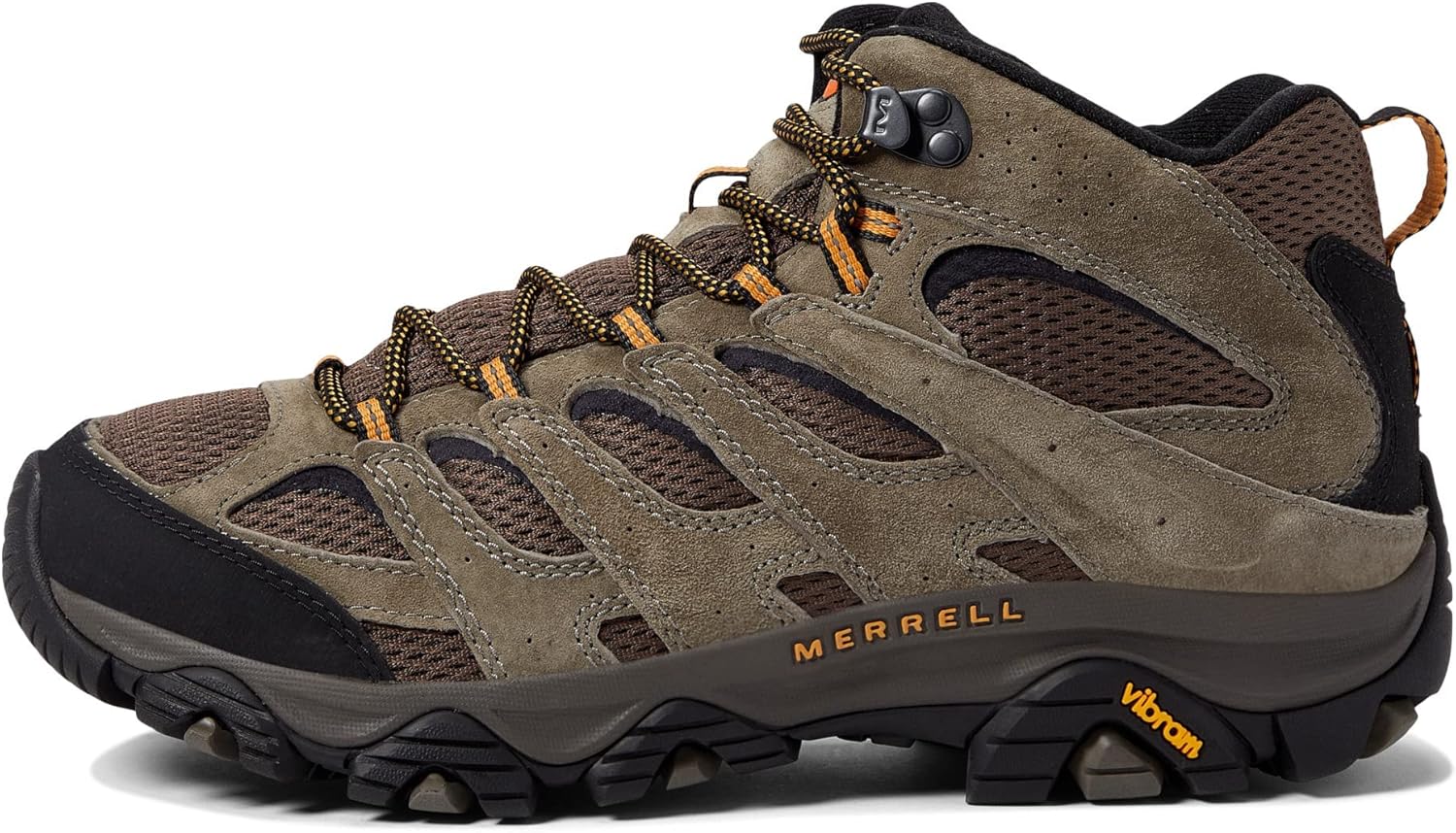
For matching footwear, see our companion guide on trail shoes for amputees with prosthetic feet, which covers outsole compounds and lug patterns that pair correctly with each tip configuration.
Training and safety: making the most of your poles
New pole users — amputee or otherwise — often grip too hard, plant too far forward, and pole-vault rather than pole-support. The correct technique for a prosthetic user is slightly different from the standard:
- Plant the pole on the same side as your prosthetic foot strikes on uneven ground, so the pole shares the load with the prosthesis rather than the sound side.
- Keep the pole tip behind your forward foot at plant on flats and climbs — pole tip ahead of your foot turns the pole into a brake.
- On descents, plant ahead — this is the one terrain where forward planting is correct, because you want to brake.
- Use the wrist strap loaded properly: hand comes up through the bottom of the strap loop so the strap supports the heel of the palm. You should be able to open your fingers entirely on flats.
- Practice on flat ground for 30 minutes before your first technical hike with new poles. Pole mis-timing on a real descent has caused real injuries.
For broader gear pairings, our complete hiking kit for prosthetic leg users covers socks, liners, anti-chafe, and emergency repair items.
Frequently Asked Questions
What pole length should an above-knee amputee use on uneven terrain?
Start with the standard elbow-90° rule on flat ground, then add 3–5 cm to your descent setting because AK gait typically involves more hip flexion and torso lean than BK gait. Many AK users also run the prosthetic-side pole 2–3 cm longer than the sound side to even out gait asymmetry, especially when fatigued late in a long day.
Are carbon or aluminum trekking poles better for amputee hikers?
Aluminum is the safer default. Carbon shatters under lateral load — exactly the failure mode that occurs when an amputee catches themselves on a pole during a stumble. The 4–6 oz per pole savings of carbon does not justify the catastrophic failure risk for hikers who rely on poles for stumble recovery. Reserve carbon for low-risk, well-graded trails.
Can I fly with my trekking poles and prosthetic equipment?
Trekking poles must be checked, not carried on. Pack them inside your checked bag or a dedicated pole tube. Prosthetic legs and accessories travel separately under disability accommodations and do not count against checked-bag limits on most major airlines in 2026. Plan for the connection time it takes for gate-checked prosthetic equipment to reach you at your destination.
Do anti-shock trekking poles really help residual limb pain?
Yes, with caveats. Anti-shock springs absorb the high-frequency impact pulses that build into end-of-day residual limb soreness and socket-interface irritation. They do not fix a poor socket fit or wrong component selection. Pair anti-shock trekking poles for amputees with prosthetic legs with the right prosthetic foot category — energy-storing or hydraulic — for the terrain you hike.
How often should I replace trekking pole tips?
Carbide trail tips last 300–500 trail miles before becoming visibly dull. Rubber boot tips wear in 50–150 miles depending on terrain. Inspect tips at the start of every multi-day trip; a dull tip can skate off rock without warning. Most major pole brands sell tip replacements for $5–15 a pair.
What is the difference between trekking poles and a forearm crutch for amputee hikers?
Forearm crutches transfer weight through the forearm cuff and are designed for sustained partial weight-bearing. Trekking poles transfer weight through the wrist strap and grip and are designed for impulse support during gait. Some bilateral amputees and severe gait-altered users prefer trail-rated forearm crutches (e.g., SideStix); ambulatory unilateral amputees almost universally do better with trekking poles.
Are there trekking poles specifically designed for amputees?
As of 2026, no major manufacturer markets a pole as "amputee-specific," but several models — particularly Leki's Micro Vario Carbon AS and Black Diamond's Pursuit Shock — combine all the features amputees need (lever locks, anti-shock, swappable tips, padded straps). The right pole is defined by features, not marketing labels.
Key Takeaways
- Choosing the right trekking poles for amputees with prosthetic legs means matching capacity and output ports to your actual devices
- Always check actual watt-hours (Wh), not just watts — runtime depends on Wh, not peak output
- Also covers: adaptive trekking poles
- Also covers: prosthetic leg hiking poles
- Also covers: amputee hiking gear
- Compare price-per-Wh across models to find the best value for your budget