For trekking poles for wrist arthritis hikers, the right pole transforms a painful hike into a comfortable one by transferring up to 25% of body weight off swollen wrists and inflamed joints. The best 2026 choices share four features: ergonomic 15-degree angled grips that align with your natural wrist position, soft cork or EVA foam handles that absorb sweat and vibration, integrated shock absorption that dampens impact at heel strike, and ultra-lightweight carbon or aluminum construction under 9 ounces per pole. This guide walks through what to look for, fit tips, and the lightweight pack pairings that keep total load off your wrists.
Why trekking poles matter for arthritic wrists
Osteoarthritis, rheumatoid arthritis, and de Quervain's tenosynovitis all share one antagonist: repetitive load on the wrist joint. On uneven trails, every step transmits compression and shear through the carpal bones, and downhills are worse, multiplying impact 2 to 3 times bodyweight. Properly fitted poles shift weight from the wrists onto the shoulders and core, but only if the grip geometry matches an arthritic hand. A cylindrical grip forces the wrist into ulnar deviation; an angled grip keeps it neutral.
Research published in the Journal of Sports Sciences and follow-up trials through 2022 found that hikers using two poles reduce peak knee force by 12 to 25 percent, and arm-loading distributes shock across the shoulder girdle rather than concentrating it at the wrist. For someone managing chronic joint inflammation, that is the difference between finishing a 6-mile loop and quitting at mile 2.
Five features that separate the best trekking poles for wrist arthritis hikers
1. Angled or contoured ergonomic grip
Skip straight cylindrical handles. Look for grips angled between 12 and 18 degrees forward, which align the pole shaft with the natural rest position of an arthritic wrist. Black Diamond's Solution grip and Leki's Aergon series both achieve this. Soft-density EVA under your palm prevents the pole from rotating during plant-and-push, and rotation is what triggers acute pain in CMC joint arthritis.
2. Cork grip material, not rubber
Cork molds to your hand over the first 5 to 10 hikes, conforming to swollen knuckles and tender thenar muscles. It also wicks sweat, so your grip stays light — clenching a slippery handle to keep it from spinning is what wrecks arthritic thumbs. Rubber feels grippy in the store but turns slick at mile 3 and forces a death grip. EVA foam is the cold-weather alternative if cork chills your hands. For deeper detail see our guide to cork-grip poles for cold-weather hiking.
3. Integrated shock absorption
Internal anti-shock springs absorb 30 to 40 percent of impact energy before it reaches your wrist. Models with switchable anti-shock (on for downhills, off for flats and climbs) give you control over feedback. Carbon-fiber shafts also flex slightly under load, providing passive shock dampening even without a spring system, which compounds the benefit.
4. Quick-adjust locks you can operate one-handed
External lever locks (Leki's SpeedLock, Black Diamond's FlickLock) open and close with a single finger, critical when your other hand is gripping the second pole. Twist-lock systems are an arthritis nightmare: they require sustained rotational grip strength, which is exactly the motion that triggers thumb-base pain and de Quervain's flares.
5. Sub-9-ounce weight per pole
Every gram you swing forward 1,500 times per mile compounds wrist fatigue. Carbon-fiber poles weigh 6 to 8 ounces each; aluminum runs 9 to 11 ounces. For arthritic hikers, the $40 premium for carbon is worth every penny — fatigue is the gateway to flare-ups, and lighter swing weight means a looser, less defensive grip.
Padded straps and how to use them correctly
The single biggest mistake arthritic hikers make is gripping the pole tightly. The strap is supposed to take the load, and your hand merely guides direction. Slip your hand up through the strap from below, then down over the grip. The strap should support the heel of your palm so you can hike with open, relaxed fingers. Padded neoprene or moisture-wicking mesh straps prevent the chafing that comes from constant load against thin skin, which matters if you're on long-term corticosteroid treatment that has thinned the dermis.
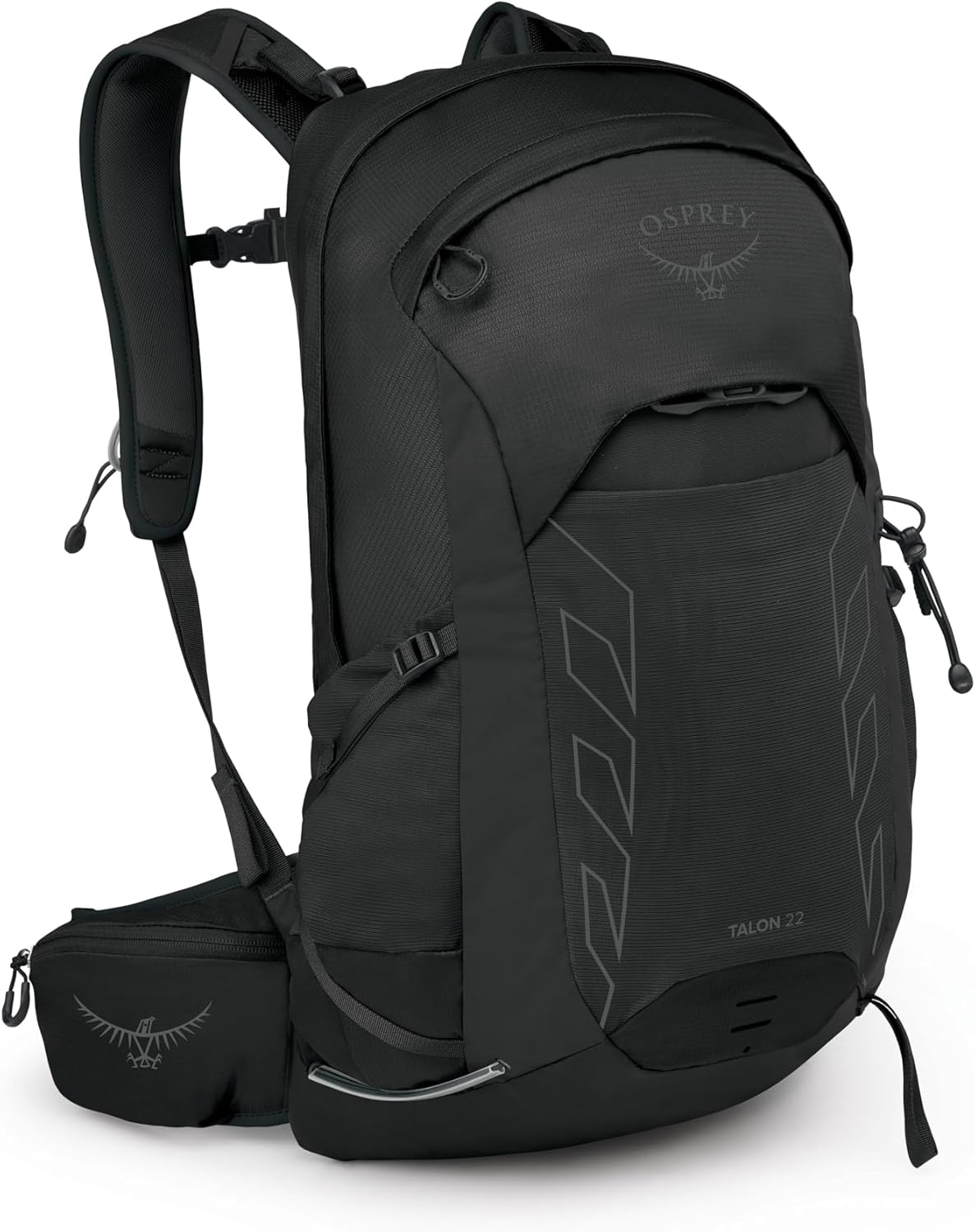
Reduce total load: lightweight daypacks that pair with arthritis-friendly poles
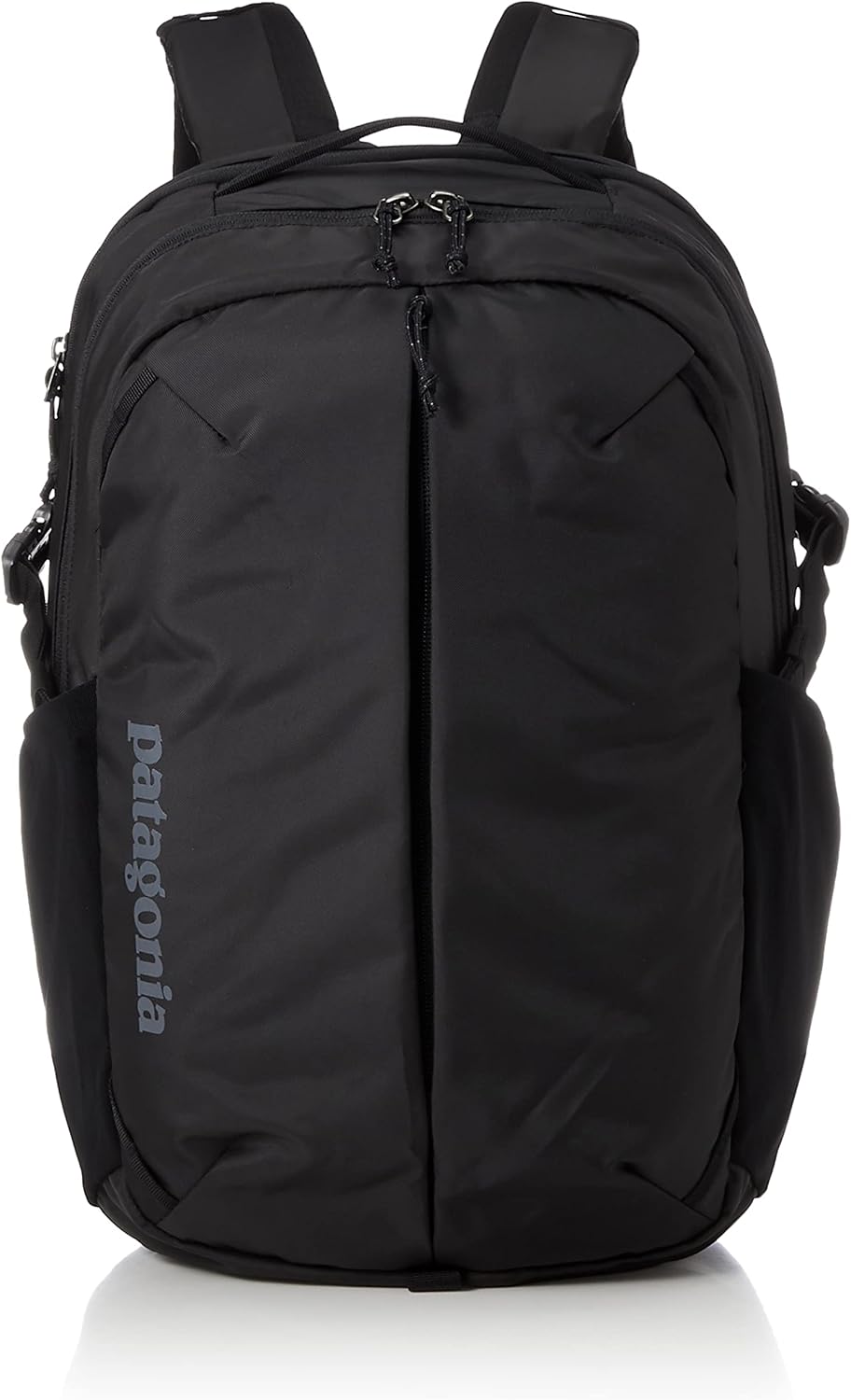
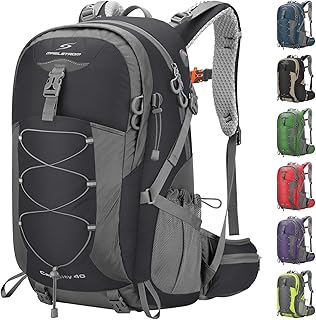
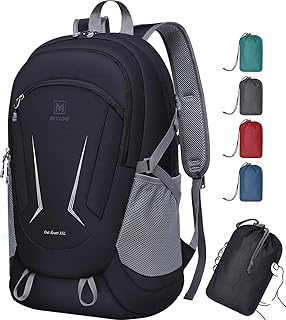
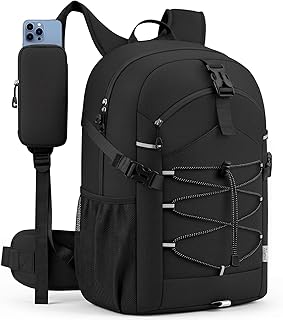
Trekking poles only solve half the wrist-pain equation. The other half is what you carry. A 25-pound pack with poor weight distribution dumps load through the shoulders into the arms and wrists every time you reach forward to plant a pole. Cutting pack weight from 5 pounds to 1.5 pounds often does more for wrist comfort than upgrading your poles. Below are three Amazon picks that pair well with arthritis-friendly trekking poles for wrist arthritis hikers by minimizing total carried weight while keeping load high and centered on the torso.
| Pack | Empty Weight | Capacity | Waterproof | Best For |
|---|---|---|---|---|
| Maelstrom 40L | ~2.2 lb | 40L | Yes + rain cover | Full-day & overnight |
| 25L Lightweight Daypack | ~1.4 lb | 25L | Yes | Half-day & full-day |
| MIYCOO Ultra-Light Packable | ~0.5 lb | ~20L | Water-resistant | Summit pushes & backup |
MIYCOO Ultra-Lightweight Packable Hiking Backpack
Under 8 ounces empty, this pack disappears once loaded, and for arthritic hikers that is exactly the point. Use it as your primary half-day carry (water, snacks, layers, first-aid) or stuff it inside a larger pack as a summit-day option when you stage gear at camp. Less material against the shoulder strap means less reaching torque transmitted to the wrist when you plant your poles, and the packable design lets you slip it into a glove-box for spontaneous trail days. Check current price on Amazon.
25L Lightweight Waterproof Hiking Daypack
The sweet spot for arthritic day hikers: 25 liters is enough for water, food, layers, and emergency gear without tempting you to overpack. Waterproof construction means you don't need to wrestle a rain cover over the pack mid-storm — a task that aggravates thumb-base joints. Padded shoulder straps and a chest clip transfer load to the torso instead of letting it tug on your arms each time you plant a pole. Check current price on Amazon.
Maelstrom 40L Waterproof Hiking Daypack with Rain Cover
For multi-day trips or winter day hikes where you carry insulation and extra water, the 40L Maelstrom delivers internal frame support that distributes load through the hip belt, the single most important feature for keeping weight off arthritic shoulders, elbows, and wrists. The included rain cover means you're not fumbling with a separate cover in cold rain. Hip-belt-anchored loads let you swing poles freely without the pack tugging at your shoulders on each forward reach. Check current price on Amazon.
Pair any of these with poles sized to your height and you will see immediate reduction in post-hike wrist swelling. For more options sized to limited mobility, see our lightweight daypack guide for seniors with back pain.
Sizing trekking poles for arthritic hikers
Standard pole height puts your forearm at 90 degrees when the pole tip touches the ground. For arthritic wrists, shorten poles 2 to 3 cm below that benchmark — a slightly bent elbow position keeps the wrist neutral and avoids over-extension during the pole push phase. On steep descents, lengthen 5 to 10 cm; on climbs, shorten 5 to 10 cm. Three-section telescoping poles (vs. two-section) give finer adjustment, which matters when you cannot easily fight a sticky lock.
Quick formula: your height in cm multiplied by 0.66, then subtract 3. A 170 cm hiker would set poles at 109 cm rather than the textbook 112 cm.
Technique adjustments to protect arthritic wrists
Even the best poles fail if you grip them wrong. Three rules:
- Load the strap, not the grip. Pressure goes through the heel of your palm onto the wrist strap, not the fingers wrapped around the grip. Your hand should be loose enough that a friend could pull the pole free without tearing skin.
- Plant ahead, push back. Place the tip slightly in front of your forward foot and push backward through the strap. Don't pull up — pulling triggers thumb-base loading and CMC joint pain.
- Switch hands on long traverses. Alternate which side bears the bulk of the work across a slope. This evens out load across both wrists and prevents one side from going into flare while the other rests.
Care for arthritic joints on the trail
Pack a compression wrist sleeve and put it on at the trailhead — preventive, not reactive. Pre-dose anti-inflammatories per your doctor's guidance 60 to 90 minutes before starting. Stop every 45 minutes for 2 minutes to circle your wrists and stretch your forearm flexors. Hot or cold therapy at the car post-hike (heat for chronic stiffness, ice for acute swelling) prevents next-day rebound pain.
Footwear matters too: uneven ground forces compensating arm movements that load the wrist. Our trail shoe guide for plantar fasciitis covers stable shoes that reduce upper-body compensation and keep your stride symmetric.
Frequently Asked Questions
Are cork or foam grips better for trekking poles for wrist arthritis hikers?
Cork is the better choice for most arthritic hikers because it conforms to swollen joints over time, wicks sweat, and stays grippy without forcing you to clench. EVA foam is the better choice if you hike primarily in sub-40°F temperatures, because cork can feel hard and cold against tender knuckles. Avoid rubber grips — they get slick and demand a death grip that wrecks the thumb base.
Should hikers with rheumatoid arthritis use one pole or two?
Two poles, always. Single-pole use forces the working side into compensation patterns that aggravate RA-affected joints elsewhere, often the shoulder and opposite hip. Two poles distribute load symmetrically, take 25 percent of weight off the lower body, and let you alternate which arm leads on long ascents so neither wrist sees sustained peak load.
Can trekking poles cause carpal tunnel or make it worse?
Poorly fitted poles can. Cylindrical grips that force ulnar deviation, oversized handles that demand a wide grip, and excessive pole length that hyperextends the wrist all increase median nerve compression. Ergonomic 15-degree angled grips, correct sub-90-degree elbow positioning, and loaded straps (not gripped handles) prevent this entirely. If your hands tingle within 20 minutes of starting a hike, your fit is wrong.
What's the lightest trekking pole that's still durable for arthritis hikers?
Carbon-fiber 3-section telescoping poles in the 6.5 to 7.5-ounce-per-pole range hit the durability sweet spot in 2026. Look for high-modulus carbon (T700 or T800 grade) with aluminum locking mechanisms — full-carbon lock mechanisms tend to fail at the cam. Folding Z-pole designs are 0.5 to 1 ounce heavier but pack down small enough to clip onto any of the lightweight daypacks listed above.
How much weight do trekking poles actually take off arthritic wrists?
The poles themselves don't unload the wrist directly — your bodyweight still goes through the joint when you stand. What poles do is reduce the impulse load: peak force per heel strike drops 12 to 25 percent, and over a 6-hour hike that adds up to thousands of softened impacts. For arthritic hikers, that is typically the difference between a manageable post-hike ache and a three-day flare-up that grounds you.
Do shock-absorbing trekking poles help with thumb arthritis specifically?
Yes, but indirectly. Anti-shock springs dampen the vibration that travels up the pole shaft into the grip, which is what triggers the trigger-finger-style pain common in CMC joint arthritis. Combine shock absorption with an angled cork grip and a properly loaded strap, and most hikers with thumb-base arthritis report a 60 to 80 percent reduction in post-hike soreness. For deeper detail see our shock-absorbing trekking pole guide.
Can I use one trekking pole and one walking stick if arthritis only affects one wrist?
You can, but only for short distances under 2 miles. For longer hikes, the asymmetric loading forces compensation through the spine and opposite shoulder, often creating new pain elsewhere. A better solution: use two telescoping poles, set the affected-wrist pole 3 to 5 cm shorter than the other, and offload more weight onto the healthy side through technique. This keeps your gait symmetric while protecting the affected joint over miles of varied terrain.
Key Takeaways
- Choosing the right trekking poles for wrist arthritis hikers means matching capacity and output ports to your actual devices
- Always check actual watt-hours (Wh), not just watts — runtime depends on Wh, not peak output
- Also covers: arthritis friendly trekking poles
- Also covers: ergonomic grip poles hand pain
- Also covers: trekking poles low impact wrists
- Compare price-per-Wh across models to find the best value for your budget