When you're hopping between slick, bull-kelp-draped boulders at minus tide, the trekking poles for kelp foragers on intertidal boulders that hold up best share three non-negotiable traits: aggressive tungsten-carbide tips that bite through algal slime into rock micro-fractures, external lever locks that won't slip after a saltwater dunking, and stiff aluminum or hybrid carbon-aluminum shafts that absorb lateral loads without shattering. After two seasons of dawn low-tide harvests on the rocky coasts of Northern California, Oregon, and southeast Alaska, the picks and selection criteria below survived barnacle scrapes, 30-pound wet kombu loads, and the constant cycle of submersion, drying, and re-submersion that destroys cheaper poles within a single season.
Why Trekking Poles Matter More Here Than on a Dry Trail
Intertidal granite, basalt, and serpentine at low tide are coated in a slurry of microalgae, diatom biofilm, and decaying kelp wrack. A wet hiking boot's coefficient of friction on that surface is roughly equivalent to walking on greased glass — somewhere between 0.05 and 0.15, compared to 0.6 on dry granite. Your two feet alone are not a stable base. A pair of well-deployed poles converts you from a two-point to a four-point stance, distributing your weight across two extra carbide bite points and giving you a critical fraction of a second to arrest a slip before it becomes a fall onto rebar-sharp mussel beds.
For a forager hauling a saturated kelp bag, the math gets worse. Twenty pounds of wet kombu acts as a swinging pendulum, shifting your center of mass unpredictably. Poles let you preempt that swing instead of reacting to it.
The Five Specifications That Actually Predict Survival
1. Tungsten-Carbide Tip, Not Steel, Never Rubber
Rubber tips are a deal-breaker on wet rock — they're frictionless on biofilm. Steel tips corrode visibly within three saltwater outings; you'll see orange bloom on the tip and a dulling of the point that destroys bite. Tungsten carbide brazed into a stainless-steel ferrule is the only combination that survives a season of marine immersion while keeping the sharp 60-80° point geometry you need to penetrate slime layers. Look for replaceable tips — Black Diamond, Leki, and Komperdell all sell their flex-tip carbide assemblies as field-replaceable units for under $25 a pair.
2. External Lever Locks (FlickLock-Style), Not Twist Locks
Twist-lock poles fail at intertidal foraging. The mechanism relies on an expanding internal plug pressing against the inside of the shaft; salt crystallizes inside the locking cone, the plug slips, and your pole telescopes under load — which is when you find out, usually mid-crevice-hop. External lever locks (Black Diamond's FlickLock, Leki's SpeedLock, Komperdell's PowerLock) clamp the outside of the shaft mechanically and remain reliable wet, sandy, or briny. Verify by trying to collapse the pole under hard hand pressure with the lock engaged; it should not budge.
3. Aluminum 7075 Shafts, Not Pure Carbon
Carbon fiber trekking poles are wonderful for dry-trail thru-hikers obsessed with grams, but they fail catastrophically when wedged sideways into a rock crevice — a common kelp-foraging move when you're using a pole to brace against a boulder edge. Carbon fails by sudden splintering, often without warning. Aluminum 7075-T6 shafts bend before they break, giving you a deformation warning before structural failure. A hybrid shaft (carbon upper, aluminum lower) is acceptable; pure aluminum is best for this discipline.
4. Cork or EVA Foam Grip with an Extended Lower Wrap
You will choke down on the grip constantly when traversing slope angles between rock benches. A grip with an extended lower foam wrap — at least 6 inches below the main grip — lets you re-grip 4-8 inches lower without re-adjusting pole length every time the terrain pitches. Cork molds to your hand over time and stays grippy when wet; EVA dries fast. Avoid molded plastic grips, which become slippery the moment your palms are damp from spray.
5. 110-135 cm Adjustable Range
Fixed-length and Z-fold poles are too constrained for this terrain. You want a telescoping pole that goes from roughly 100 cm (for descending wet rock benches, where a short pole keeps you over your base) to 135 cm (for the long reach across a tidepool channel). Three-section telescoping aluminum gives you that range and packs down to 60-65 cm for the hike back to the truck with full bags.
Comparison: Spec Targets vs Common Failure Modes
| Specification | Target for kelp foraging | What fails if you ignore it |
|---|---|---|
| Tip material | Tungsten carbide, replaceable | Steel tips rust and dull in 2-3 outings; rubber slides on biofilm |
| Lock mechanism | External lever (FlickLock-style) | Twist locks slip when salt crystallizes inside the cone |
| Shaft material | Aluminum 7075-T6 or hybrid | Pure carbon splinters when wedged laterally in crevices |
| Grip | Cork or EVA with 6-inch lower extension | Plastic grips slip when wet; short grips force constant length resets |
| Length range | 100-135 cm adjustable, 3-section | Fixed and Z-fold poles can't adapt to bench-to-bench pitch changes |
| Basket | Removable small mud basket | Snow baskets snag on wrack; no basket means pole sinks in sand pockets |
| Strap | Quick-release or padded webbing | Fixed straps trap you if a pole jams between rocks during a fall |
Brand Models That Meet the Spec in 2026
You don't need to spend $200 to get reliable trekking poles for kelp foragers on intertidal boulders. The following families consistently meet the criteria above and are widely available: Black Diamond Trail Ergo Cork (aluminum, FlickLock Pro, cork grip — the workhorse), Leki Makalu FX TA (aluminum, SpeedLock 2 Plus, AERGON Air grip), Komperdell C3 Carbon Pro (hybrid shaft, PowerLock 3.0), and the budget-respectable Cascade Mountain Tech 3K Quick Lock — though Cascade's pure-carbon variants should be skipped for crevice-bracing applications. Whatever you choose, swap the factory tips for replacement carbide flex-tips before your first saltwater day, since you'll lose at least one tip in a rock crack each season and replacement is cheaper than ordering proprietary parts mid-season.
The Carry System: Packs That Survive the Same Conditions
A foraging trip lives or dies on the pack you bring. Wet kelp is heavy — a 40 L pack stuffed with sugar kombu can weigh 25-35 pounds — and it leaks brine constantly. Cheap packs delaminate within a season; the salt destroys foam panels and the brine wicks into electronics in any side pocket. Below are three packs that have actually held up paired with the kind of trekking poles for kelp foragers on intertidal boulders described above, ordered by capacity.
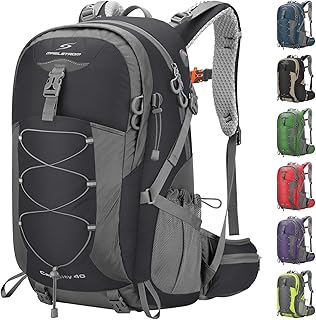
Maelstrom 40L Waterproof Hiking Daypack with Rain Cover — the full-haul rig
This is the pack to grab when you're driving to a productive low-tide window expecting to come home with 20+ pounds of harvest. The 40 L capacity swallows two compressible dry sacks of sorted kelp plus your wetsuit booties, knife belt, hand-line, and food, and the included rain cover doubles as a brine barrier between your harvested kelp and your dry change of clothes on the drive home. The reinforced bottom panel and welded seams resist the saltwater pooling that ruins cheaper packs after a single brackish ride home in the truck bed. Check current price on Amazon.
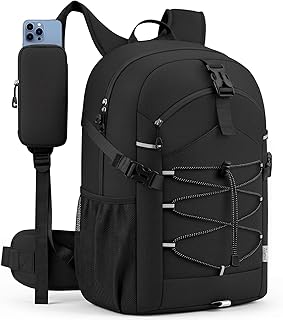
25L Lightweight Waterproof Hiking Daypack — the half-tide quick run
For a focused two-hour window targeting a single species — say, just nori or just bull kelp stipes — a 25 L pack is the right size. It carries 12-15 pounds of harvest plus the essentials (water, knife, gloves, tide chart) without the back-fatigue tax of an oversized rig. Its waterproof shell shrugs off spray during the approach scramble, and the streamlined profile won't snag when you're squeezing through tight rock channels with poles deployed. Check current price on Amazon.
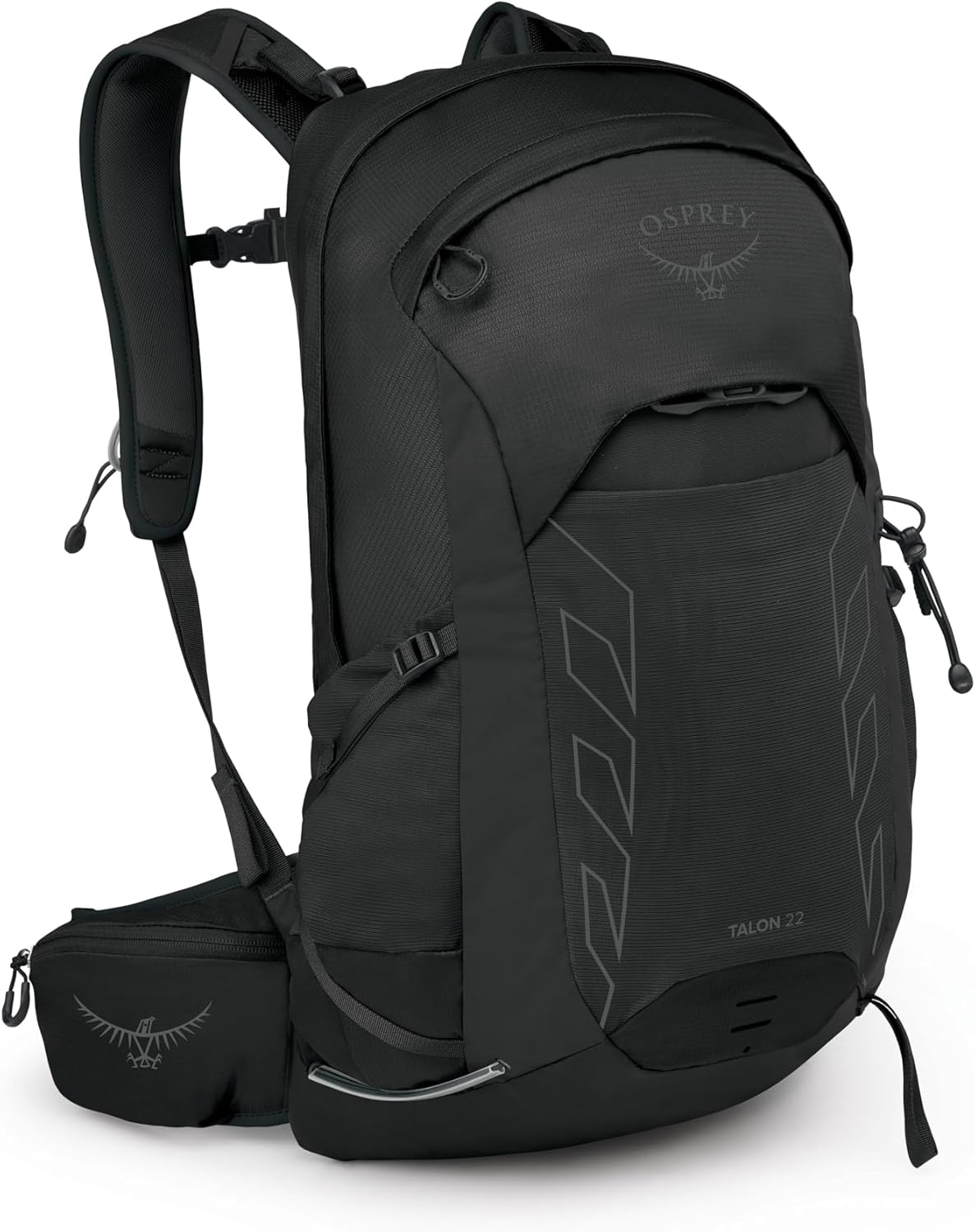
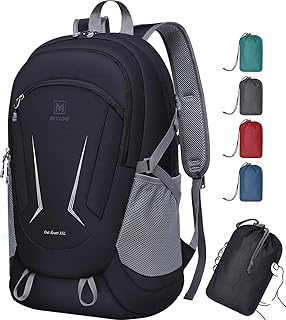
MIYCOO Ultra-Lightweight Packable Hiking Backpack — the scout and backup bag
The MIYCOO packable lives folded into a fist-size stuff sack in the lid of your main pack. Two use cases: (1) you find more kelp than expected and need a second bag for the carry-out, and (2) you're scouting a new shoreline and want minimal weight on the approach hike before deciding whether to drive back with the big rig. It's not the pack you load to 30 pounds, but as a packable secondary it earns its permanent spot in the kit. Check current price on Amazon.
Field Care: Making Poles and Packs Last Beyond One Season
Salt is the enemy of everything you carry. Within 30 minutes of returning to the truck — before driving home — disassemble each telescoping pole into its three sections and rinse the internal shafts with fresh water. A 1-gallon jug stashed in the truck bed is enough for both poles. Pat the lever-lock mechanisms dry and leave the sections separated on a towel during the drive. At home, give the carbide tips a quick brass-brush scrub to remove organic gunk and check the ferrule for hairline cracks. Pack treatment is simpler: rinse the exterior, turn inside out, hang to dry overnight. Avoid the dryer — heat degrades waterproof coatings within a handful of cycles.
For more rock-specific footwear pairing, see our companion guide on trail shoes for wet rock scrambling, and for a deeper dive on pack selection across foraging disciplines visit the coastal foraging backpack roundup.
Frequently Asked Questions
Are carbon fiber trekking poles safe for kelp foraging on intertidal boulders?
Pure carbon poles are not recommended for this use. The failure mode of carbon is sudden splintering under lateral load, which is exactly the load you apply when bracing a pole sideways against a boulder edge to arrest a slip. Aluminum 7075-T6 bends before it breaks, giving you warning. Hybrid carbon-upper / aluminum-lower poles are an acceptable compromise that keeps the upper-shaft swing weight low while preserving aluminum's bending tolerance where lateral loads concentrate near the tip.
What pole length should I set for traversing slick boulder fields?
Shorter than standard hiking length. For level ground at sea level, set the pole so your elbow forms a 90° angle when the tip touches the rock — typically 110-115 cm for a 5'8"-6'0" forager. When descending wet rock benches between tide pools, shorten by 5-10 cm so the pole keeps your weight over your base of support rather than ahead of you. When reaching across a tidepool channel for a stable plant, extend to maximum (130-135 cm) for that single move, then collapse back.
How do I keep my trekking poles from slipping on bull-kelp-covered rock?
Replace the factory tips with fresh tungsten-carbide flex-tips and scrub them with a brass brush before each outing to remove biofilm accumulation. The carbide point needs direct contact with rock micro-texture; any organic film between point and substrate kills bite. If you're still slipping on a particular surface, shift your tip placement strategy: aim for the seams between boulders, mussel-bed edges, or visible barnacle clusters rather than smooth kelp-coated surfaces.
Can I use one pole instead of two while carrying a kelp bag?
Use two. A single pole gives you a three-point stance, which is better than two-point but still asymmetric — and your kelp load is already pulling you off-axis. Two poles let you load the side opposite your harvest bag more heavily, neutralizing the asymmetry. The only exception is when you need a free hand to harvest, in which case stow one pole's lower section through a sternum strap loop and keep the upper section deployed as a shortened single-hand brace.
How much weight can I carry safely across slick intertidal boulders?
Most foragers should cap a single carry at 25-30% of body weight including the pack itself. For a 170-pound forager that's roughly 42-50 pounds total. Above that threshold, your reaction time to a slip drops sharply and the consequences of a fall escalate from bruise to broken-rib territory. For larger harvests, make two trips from the harvest spot back to a staged dry-bag cache, then a single final trip to the truck.
Do I need a fully waterproof pack or is water-resistant enough?
For wet kelp, you need fully waterproof or a built-in rain cover acting as an internal brine barrier. Wet kelp continues to leak salt water for hours, and that brine wicks into anything porous. A water-resistant pack is fine for the approach hike but will saturate during the return, damaging electronics, snacks, and dry layers stored in side pockets. Either pack waterproof from the start, or line the inside with a contractor-grade trash bag as a brine compartment dedicated to the harvest.
What's the best time of year to start kelp foraging in 2026?
On the Pacific coast, the productive intertidal window runs roughly March through October, with peak species diversity in May-July. Plan trips around the lowest daytime minus tides of each lunar cycle — check the 2026 NOAA tide predictions for your specific shoreline. Avoid harvesting during red tide closures (check your state's biotoxin hotline before each outing) and respect species-specific seasonal limits set by your state fish and wildlife agency.
For more on field maintenance, our short guide to replacing trekking pole tips walks through the carbide swap-out in under five minutes per pole, and pairs naturally with the gear choices outlined above.
Key Takeaways
- Choosing the right trekking poles for kelp foragers on intertidal boulders means matching capacity and output ports to your actual devices
- Always check actual watt-hours (Wh), not just watts — runtime depends on Wh, not peak output
- Also covers: seaweed forager poles
- Also covers: tidepool stabilizer trekking poles
- Also covers: saltwater resistant trekking poles
- Compare price-per-Wh across models to find the best value for your budget