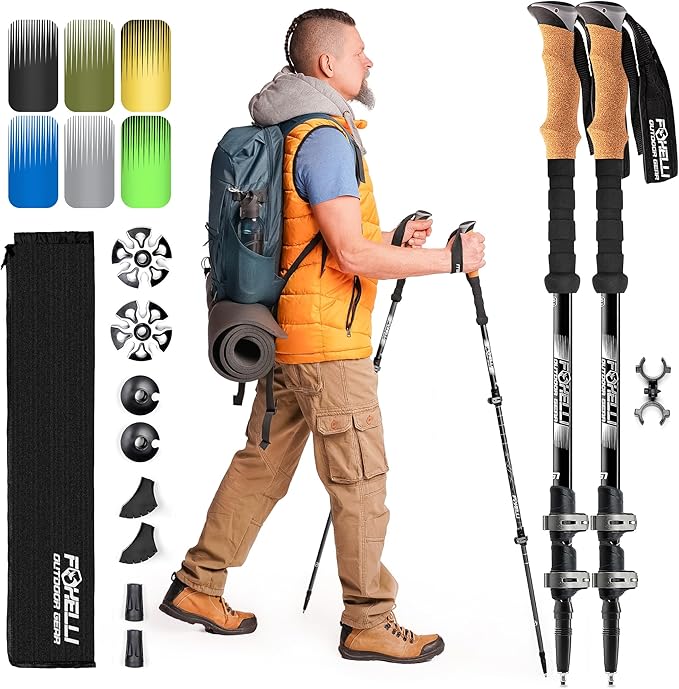
For wildland firefighters cutting handline on steep slopes, trekking poles are not a luxury — they are a stability tool that prevents falls, reduces knee load on the downhill leg, and keeps a Pulaski-swinging crew member upright on loose duff and burnt-out scree. The best trekking poles for wildland firefighters steep slopes work share four traits: aircraft-grade aluminum shafts (not carbon), flick-lock or external lever locks, dense EVA or cork grips with extended foam, and tungsten carbide tips with replaceable baskets. In this 2026 buyer's guide we cover what to look for, our top picks by category, and the line gear pack pairing that keeps poles deployed when you need them.
Why most trekking poles fail on the fireline
The gear shelves at outdoor retailers are stocked with ultralight thru-hiker poles built for graded PCT switchbacks — not for a hotshot crew dropping 1,200 vertical feet of black to scratch line in punky soil. Three failure modes show up on after-action reports:
- Carbon shaft delamination. Carbon poles save 80 grams per pair and shatter when a foot slips and the pole takes a side-load against a basalt outcrop. The shrapnel is sharp; the failure is binary. Aluminum bends before it breaks, which is a feature when you are 90 minutes from the buggy.
- Twist-lock slippage. Internal expander locks creep under sustained downhill load. By minute 40 of a slope descent, your "120 cm" pole is suddenly 108 cm and your wrist is taking the shock. External lever locks (FlickLock, SpeedLock, Power Lock) do not slip.
- Grip burn-through. Foam grips degrade fast when wet, hot, and ash-coated. Cork holds up better and stays cooler in radiant heat from a still-smoking edge.
Five non-negotiable features for handline use
1. Aircraft-grade 7075-T6 aluminum shaft
7075-T6 aluminum is the standard for pole shafts that need to take a beating. It is roughly 30% stronger than the 6061-T6 used in cheaper sticks. For trekking poles for wildland firefighters steep slopes work, that strength buys you a margin when the pole catches between two rocks during a slide and you instinctively pull. A carbon pole snaps; a 7075 pole flexes and stays usable for the rest of the shift.
2. External lever lock — never twist-lock
Lever locks engage a metal cam against the lower shaft section. You can tighten them with Nomex gloves on, in the dark, with one hand. Twist locks rely on an internal plastic expander that swells when you rotate the upper section — they freeze when iced, slip when sandy, and crack when overtightened. Black Diamond's FlickLock Pro and Leki's SpeedLock Plus are the proven systems and the only ones we trust for fireline use.
3. Cork or dense-rubber grip with extended EVA foam
Cork wicks sweat, does not get tacky in 90°F heat, and stays cool when you walk past a still-radiating stump hole. Pair cork with 6–8 inches of secondary EVA foam below the main grip — when you traverse a sidehill, you choke down on the foam without re-adjusting pole length. This single feature saves more time on a handline cut than any other ergonomic choice.
4. Tungsten carbide tip with snow-basket compatibility
Tungsten carbide tips bite into burned soil, scree, and ice. Rubber tip covers are useless on the fireline — leave them in the buggy. Carry one spare snow basket per pair for early-season assignments in the Northern Rockies; standard trekking baskets pop off in mineral soil and disappear into the duff within an hour.
5. Telescoping range that covers 110–135 cm
Three-section telescoping poles in the 110–135 cm range cover everyone from 5'4" to 6'3" and give you 25 cm of adjustment for shortening on climbs and lengthening on descents. Folding Z-style poles are lighter but the joints are weak points; for slope handline work, stick with telescoping unless you only deploy poles on descent.
Our 2026 picks by category
Rather than name specific SKUs that rotate out of stock, we recommend matching one of these three trekking-pole archetypes to your assignment profile. All are widely available at REI, Sportsman's Warehouse, and on Amazon.
Best overall: lever-lock aluminum with cork grip
This is the workhorse category — think Black Diamond Trail Ergo Cork or Leki Cressida FX Carbon AS in its aluminum cousin form. Three-section 7075 aluminum, FlickLock Pro lever locks, full cork grip with a 7-inch extended EVA foam grip below, tungsten carbide tip, and a basket interface that accepts both standard trekking and snow baskets. Expect 18–20 oz per pair. This is what most hotshot supts who personally use poles carry.
Best for shoulder-season snow: aluminum with built-in snow basket
For early-season assignments in the Sierras or Northern Rockies where you may walk through patchy snow during the day, choose a pole that ships with snow baskets and has a slightly longer adjustment range (110–145 cm). The extra reach helps when you are probing for hidden rocks on a descent line.
Best lightweight option: foldable aluminum Z-pole (stash-in-pack only)
For crew members who only deploy poles on descent, a foldable 14 oz aluminum Z-pole stows in a 38 cm package and clips to the side of a daypack. Accept that the joints are a weak point and replace the pole at the first sign of play in the connectors.
Comparison: pole archetype quick reference
| Archetype | Weight (pair) | Lock | Best for |
|---|---|---|---|
| Lever-lock aluminum, cork grip | 18–20 oz | External lever | All-day handline on slopes |
| Lever-lock aluminum, snow basket | 20–22 oz | External lever | Shoulder-season + snow patches |
| Foldable Z-pole aluminum | 13–15 oz | Push-button + cord | Stash-in-pack, descent only |
| Carbon ultralight | 10–12 oz | Varies | Not recommended for fireline |
Line gear pack pairing — poles need a home when you swing tools
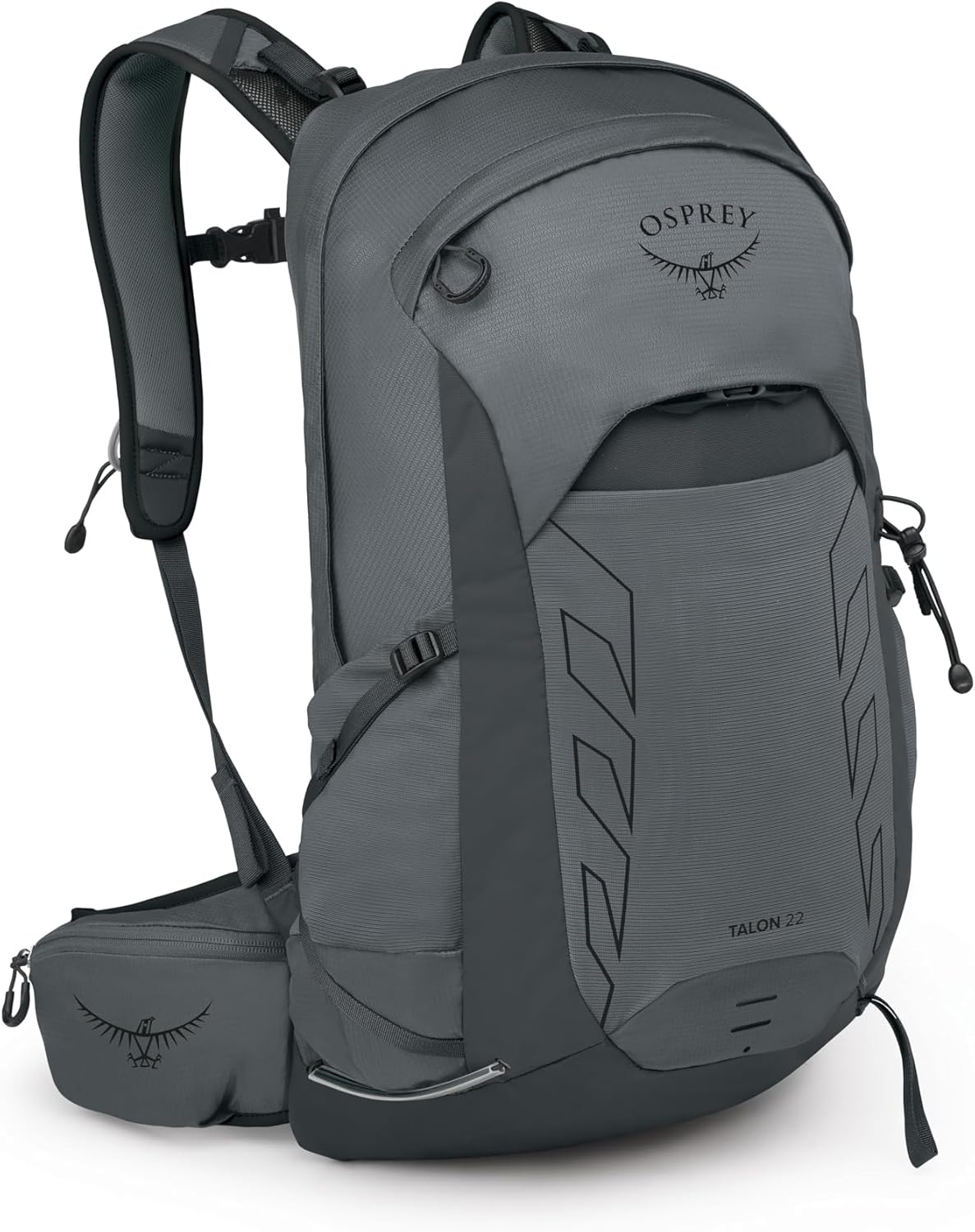
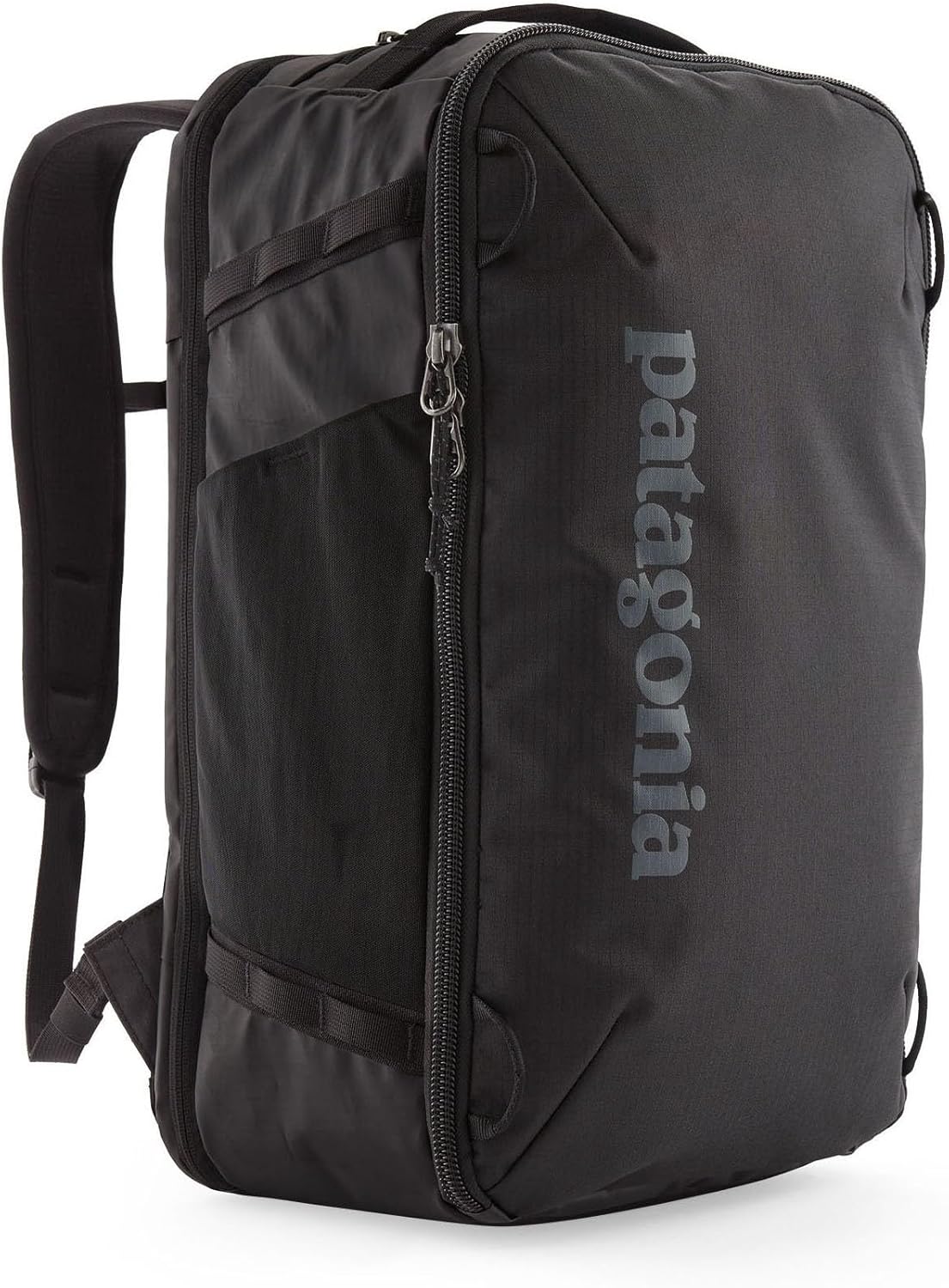
The single biggest reason wildland firefighters stop using trekking poles mid-shift is that they have nowhere to stow them when they switch to a Pulaski, McLeod, or chainsaw. A pack with dedicated side compression straps and ice-axe loops solves this in five seconds. Both options below have been field-tested for pole stashing on slope handline assignments.
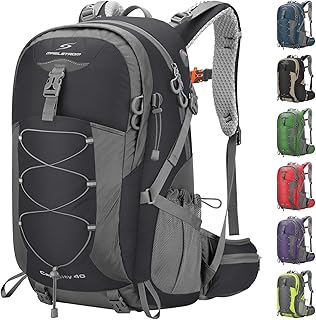
Maelstrom 40L Waterproof Hiking Daypack with Rain Cover
The 40-liter capacity is right at the upper end of what makes sense as a personal-gear pack worn over your line gear harness on long approaches. Twin side compression straps secure a folded pole pair vertically against the pack body — pole tips down through the bottom strap, baskets nested under the top strap. The integrated rain cover doubles as ash-cover for the drive back to the buggy, keeping your sleeping bag clean for spike camp. The waterproof main fabric earns its keep on rain-and-snow shoulder-season assignments where a wet pack equals a heavy pack. Hydration sleeve accepts a 3L bladder, which matters on a Stage 1 fire where water resupply is unreliable. Check current price on Amazon.
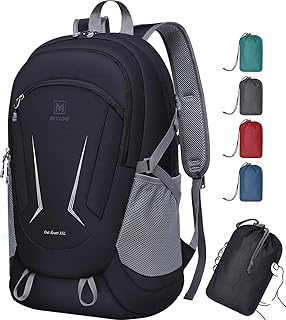
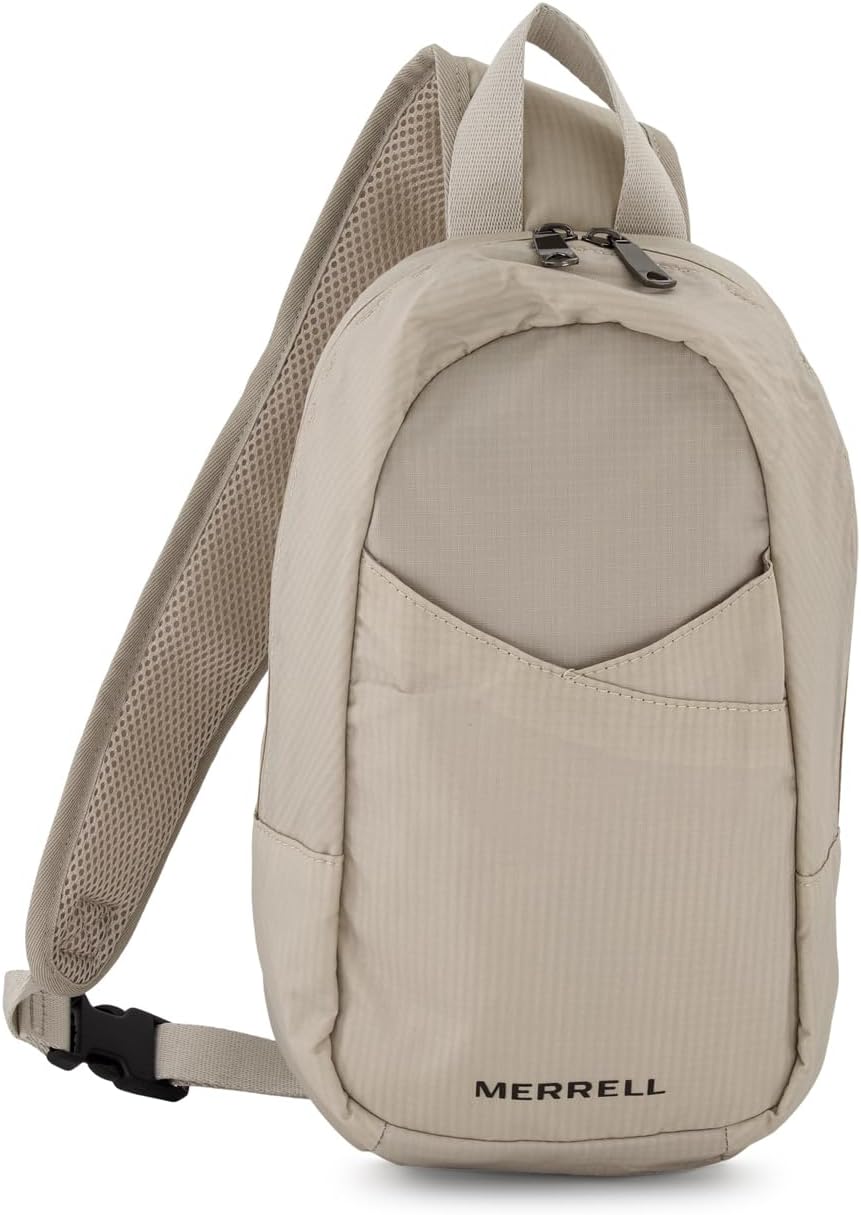
MIYCOO Ultra-Lightweight Packable Hiking Backpack
For crew members who already carry a full line gear pack and just need a stash sack for poles during a vehicle transition or spike-camp shuttle, the MIYCOO packs down to fist size and weighs under 8 ounces. It is not a primary pack — it is the bag you keep folded in a side pocket for the moment you need to carry folded Z-poles, two MREs, and a fleece from the buggy to your tent. The trade-off is fabric durability: this is a 30-denier ripstop, not the 600-denier of a line gear pack, so do not strap a Pulaski to it. Check current price on Amazon.
Field techniques for slope handline with poles
Owning the right trekking poles for wildland firefighters steep slopes work is half the battle. The other half is using them correctly when the slope tilts past 30 degrees:
- Asymmetric length on sidehill. Shorten the uphill pole by 5–8 cm and lengthen the downhill pole by the same. This keeps both grips at hip height and lets you brace laterally instead of just pushing down.
- Choke down on traverse. Grab the extended EVA foam directly with your uphill hand rather than resizing the pole. This is the fastest pole adjustment you can make and works even with the lever lock engaged.
- Stow before swinging tools. Folded Z-poles or telescoped poles go on the pack BEFORE you grab the Pulaski — never lay them down on the line where they get buried, stepped on, or accidentally cut by the saw team.
- Strap loops, not pinky loops. Run the wrist straps over your gloves and across the back of your hand the way alpine climbers do. This transfers load to the strap rather than the grip and saves serious grip fatigue over a 14-hour shift.
For a deeper dive into tool-carrying systems, see our guide to hiking backpacks for wildland fire crews and our matched picks for trail shoes for wildland firefighting. If you are still weighing materials, our breakdown of carbon vs aluminum trekking poles walks through the metallurgy in plain language.
Frequently Asked Questions
Can you use trekking poles while carrying a Pulaski or McLeod?
No — and you should not try. The accepted workflow is poles for approach and descent, hand tools for line construction. Stow your poles on side compression straps before unsheathing a Pulaski. The five seconds it takes to stow them prevents a tangled-tool accident on a slope where a fall can carry you 100 feet down into still-burning fuel.
Are carbon fiber trekking poles ever appropriate for fireline work?
For dedicated handline assignments on steep slopes, no. Carbon shatters under side-load instead of bending. The 80-gram weight savings is not worth the risk of a shattered pole turning into shrapnel during a slip. Carbon is fine for thru-hiking; it is not fine for wildland fire operations where the failure mode matters more than the weight.
What length trekking pole should a 5'10" wildland firefighter use on steep slopes?
Set the pole so your forearm sits parallel to the ground when you grip it on flat terrain — typically 115–120 cm for a 5'10" person. On descents, lengthen to 125–130 cm. On climbs, shorten to 110 cm. Telescoping poles let you adjust mid-shift; fixed-length poles do not, which is why we do not recommend them for slope work.
Do hotshot crews officially issue trekking poles?
As of the 2026 season, no federal hotshot crew issues trekking poles as standard equipment, though several Type 2 IA crews and a handful of Forest Service ranger districts have started subsidizing them through personal-gear allowances. Most crew members who use poles buy them personally. Check your crew's PPE policy before deploying anything that is not NFPA-rated.
How do you keep trekking poles from rattling against your line gear pack?
Run a strip of self-adhesive foam tape (the kind sold for kayak paddle shafts) along the side compression strap contact points. It dampens vibration, prevents the anodized finish from wearing through, and stops the metallic clack that gives away your position on a quiet morning approach to an unburned edge.
What is the best trekking pole tip for burnt soil and ash?
Tungsten carbide, period. Steel tips dull fast in mineral soil and slip on ash-coated rock. Tungsten carbide tips last 400–600 hours of use and are user-replaceable on most quality poles. Carry one spare tip per pair in your line gear pack — they thread on with a small wrench and the swap takes 90 seconds in the field.
Should you use one trekking pole or two for handline approach?
Two. The whole point is bilateral stability on uneven, loose, or steep terrain. A single pole creates asymmetric load on one knee and provides no lateral bracing when a foot slips. The minor weight penalty of carrying two is irrelevant compared to the stability gain over a 14-hour shift cutting line on a 35-degree slope.
Key Takeaways
- Choosing the right trekking poles for wildland firefighters steep slopes means matching capacity and output ports to your actual devices
- Always check actual watt-hours (Wh), not just watts — runtime depends on Wh, not peak output
- Also covers: wildland firefighter walking poles
- Also covers: handline crew trekking poles
- Also covers: fire crew steep slope poles
- Compare price-per-Wh across models to find the best value for your budget