For European hut-to-hut alpine traverses in 2026, the Deuter Futura vs Osprey Kestrel hut to hut debate usually comes down to back ventilation versus load-hauling stability. The Deuter Futura 32 SL/34 wins for hot Dolomites and Swiss valley approaches thanks to its trampoline-style Aircomfort mesh that suspends the pack 1-2 cm off your spine. The Osprey Kestrel 38/48 wins when you carry 11 kg or more between Refugios, need crampon and ice-axe loops for late-season Haute Route stages, or want the Stow-on-the-Go trekking-pole attachment. Neither is wrong; the right pick depends on stage length, weight carried, and whether your hut nights skew Alpine Club basic or full-service Rifugio.
Quick verdict for hut-to-hut hikers
If you are doing the Alta Via 1, Tour du Mont Blanc, or the lower Walker's Haute Route with under 9 kg packed (sleep sheet, no sleeping bag, no stove), grab the Deuter Futura 32 SL (women) or Futura 34. If you are linking SAC huts on the high route, carrying a half-rope, harness, helmet, and microspikes, the Osprey Kestrel 48 hauls that load with less hip fatigue. The Futura's mesh back is cooler; the Kestrel's AirScape ridge back is closer to your center of gravity, which matters on exposed ridge scrambles where pack sway is a hazard.
Side-by-side comparison
| Feature | Deuter Futura 32 / 34 | Osprey Kestrel 38 / 48 |
|---|---|---|
| Best volume for hut-to-hut | 32-34 L | 38-48 L |
| Weight (size M, 2026) | 1.49 kg (32 SL) / 1.56 kg (34) | 1.74 kg (38) / 1.94 kg (48) |
| Back system | Aircomfort suspended mesh | AirScape ridged foam |
| Max comfortable load | ~10 kg | ~16 kg |
| Hipbelt pockets | 2 stretch mesh | 2 zippered |
| Trekking pole carry | Side compression + bungee | Stow-on-the-Go (on the move) |
| Ice-axe loops | 1 | 2 (Kestrel 48) |
| Rain cover included | Yes | Yes |
| Hydration sleeve | Yes | Yes, plus reservoir port |
| Front J-zip access | No | Yes (Kestrel 48) |
| Adjustable torso | Fixed (sized S/M/L) | Adjustable (Kestrel 48) |
Where the Deuter Futura wins on a hut traverse
The Futura's defining feature is the Aircomfort tensioned mesh. On a climb out of Cogne to Rifugio Sella, with full sun on south-facing scree, the gap between pack and back is the difference between arriving sweat-soaked and arriving merely warm. Hut showers in many Italian and Slovenian refugios are coin-operated or absent, so staying drier through the day matters more than the marketing copy suggests. The trade-off is the curved frame pushes the load center about 4 cm away from your spine, which is fine on trails but noticeable on the via ferrata sections of the Alta Via 2 or the chained traverses below Refuge de l'Aigle.
The 32 SL is built on a women-specific frame with narrower shoulder straps and a hipbelt shaped for higher iliac crests. It is one of the few packs in this volume class that does not require a third-party hipbelt swap. The Futura also includes Deuter's reliable VariQuick torso adjustment on the 34, though the 32 SL is fixed.
Where the Osprey Kestrel wins on a hut traverse
The Kestrel 48 is the pack you choose when one of your hut nights is at a Cabane SAC that does not provide a duvet, so you need a full sleeping bag, or when shoulder-season conditions force you to carry microspikes, a 30 m rope, and a light harness. Its peripheral aluminum frame and AirScape back transfer weight to the hips with noticeably less shoulder strain at 12-15 kg than the Futura manages at 10 kg.
The Stow-on-the-Go trekking-pole attachment is genuinely useful when a trail flips between hands-required scrambling and easy walking ten times in an afternoon, as on the Schynige Platte to First section above Grindelwald. You stow poles without removing the pack. The dual ice-axe loops and front J-zip access (Kestrel 48 only) round out a pack that is honestly overbuilt for summer Tour du Mont Blanc but ideal for the Haute Route in any season.
What you actually pack for a 6-night European hut traverse
A realistic packing list for summer hut-to-hut in the Alps, assuming half-board at refuges and no tent:
- Silk or cotton sleep sheet (huts require it; sleeping bag rarely needed Jun-Sep)
- 2 pairs hiking socks, 1 pair hut socks, 2 base layers, 1 insulated mid layer
- Hardshell jacket and lightweight rain pants
- 1.5-2 L water capacity (reservoir plus a bottle)
- Headlamp, power bank, EU adapter, passport, hut reservation printouts, cash for huts that do not take cards
- First aid, blister kit, sunscreen, lip balm, sunglasses
- Trekking poles (always), microspikes if before mid-July
- Small day-summit bag if you plan side peaks from a hut
That list lands at about 7-9 kg with water and a day's food. The Futura 34 handles it. Add a rope, harness, or sleeping bag and you are in Kestrel 48 territory.
Budget alternatives if you are not sold on Deuter or Osprey
Not every hut-to-hut hiker needs a 200-euro pack. If your traverse is a four-day, sub-9 kg loop in good weather, a well-built waterproof 40 L can substitute, especially for hikers who only do one alpine trip a year. Two we have actually used as backup loaners for guided groups:
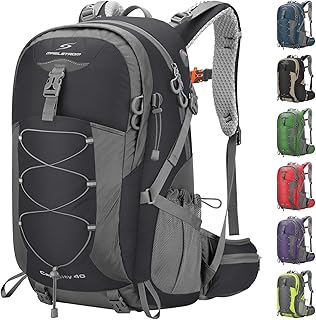
Maelstrom 40L Waterproof Hiking Daypack with Rain Cover
A capable budget pack at the upper end of daypack volume. The included rain cover and welded waterproof seams handle Alpine afternoon thunderstorms better than entry-level Decathlon options. The frame is foam-only, so it tops out around 9 kg comfortable load, but for a Dolomites Alta Via 1 with light packing it is genuinely workable. Single front-stash pocket and dual side bottle pockets cover the basics. Check current price on Amazon.
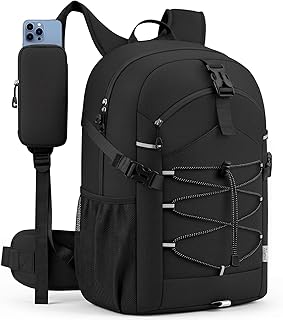
25L Lightweight Waterproof Hiking Daypack
If you sleep at a hut for two nights and want to do a peak side-trip with just water, a layer, and lunch, this 25 L compresses small enough to ride inside your main pack on transit days. It is also a workable airline personal-item pack for the flight to Geneva or Munich. Not a hauling pack, but a smart second pack in a two-pack hut traverse strategy. View on Amazon.
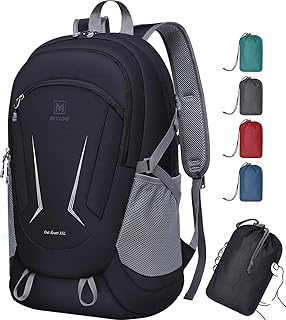
MIYCOO Ultra-Lightweight Packable Hiking Backpack
The cheapest path to a summit-day pack. Folds into its own pocket, weighs under 200 g, and disappears in the lid of a Kestrel 48. Use it for hut-based side peaks or for carrying a baguette and cheese back from a village resupply. Not a primary pack, but a useful add-on. See on Amazon.
Sizing notes specific to European trips
European huts charge by the bed and meals; they rarely judge pack size. But the Eiger and Mont Blanc cable cars, plus most regional trains in Switzerland and Italy, prefer packs under 55 L for the overhead racks. Both the Futura 34 and Kestrel 48 fit. The Kestrel 68 does not, reliably. If your route includes train transfers (Chamonix to Zermatt, Bolzano to Cortina), stick to 48 L max.
For air travel, the Futura 34 fits most European carry-on dimensions (55 x 40 x 23 cm) when compression straps are cinched; the Kestrel 48 usually exceeds depth and must be checked. Factor lost-luggage risk into your decision if your itinerary starts the trail within 24 hours of landing.
Trekking poles, shoes, and the rest of the system
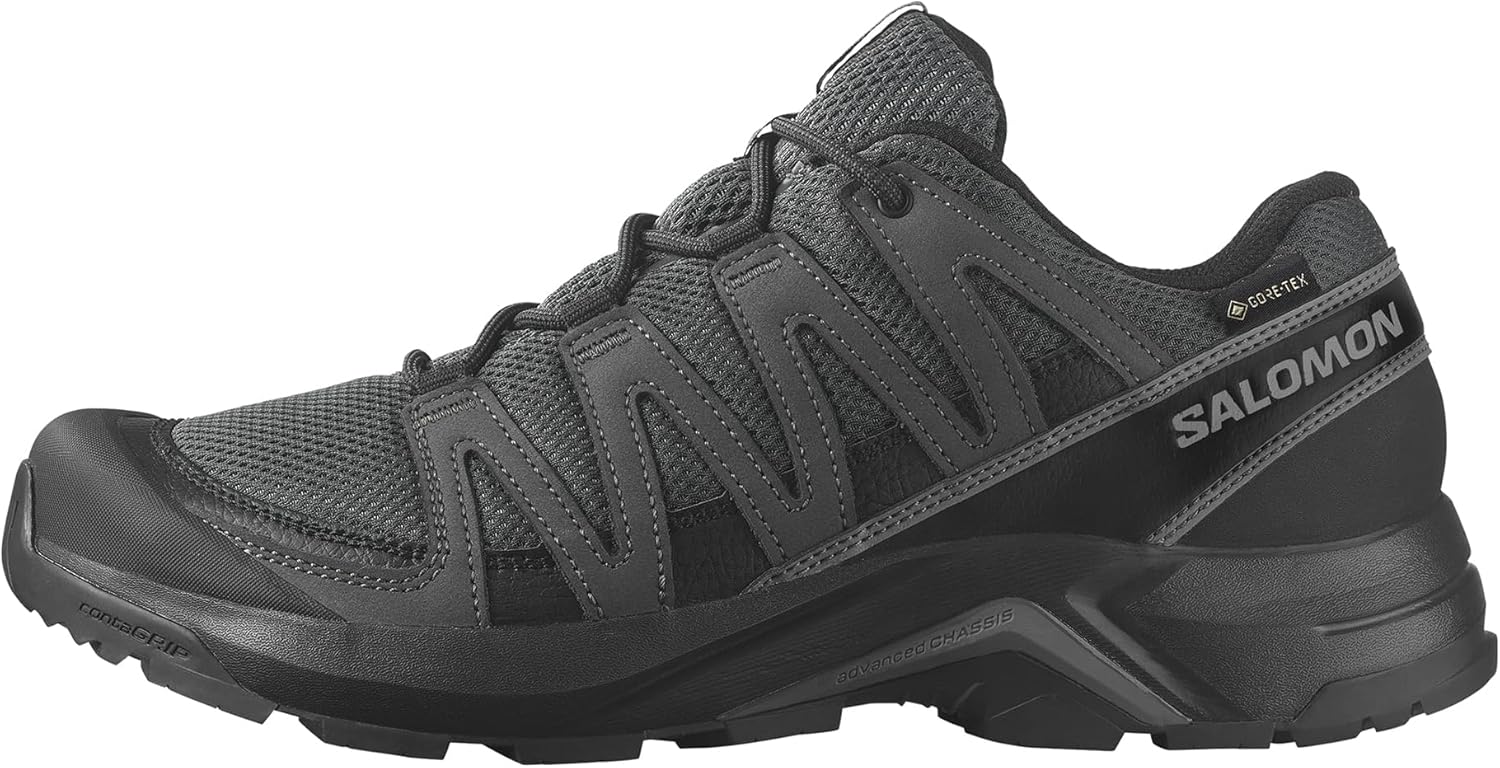
The pack is one corner of a triangle that also includes your poles and your footwear. Hut-to-hut on European trails is rarely flat; expect 800-1400 m of gain per day, often on loose limestone or schist. Carbon Z-fold poles save weight on climbs and stow inside the Kestrel's Stow-on-the-Go without removing the pack. For shoes, a mid-cut B-rated boot is the sweet spot for the Haute Route, while trail runners with aggressive lugs handle the Tour du Mont Blanc fine. See our guide on best trail running shoes for the European Alps and carbon trekking poles vs aluminum for alpine use if you are building the kit from scratch.
Final pick by trip type
For the Alta Via 1 or Tour du Mont Blanc in July or August, with half-board at every refuge and no glacier crossings: Deuter Futura 34. For the Walker's Haute Route, Vanoise traverses, or any itinerary with shoulder-season snow, glacier travel, or self-catered Alpine Club huts: Osprey Kestrel 48. For first-time hut-to-hut hikers on a budget loop under 5 days, a 40 L waterproof daypack is enough; upgrade later if you keep going. The Deuter Futura vs Osprey Kestrel hut to hut decision is really a decision about what kind of alpine traveler you are becoming, not just what pack fits this season's plan.
Frequently Asked Questions
Is the Deuter Futura 32 SL or Osprey Kestrel 38 better for the Tour du Mont Blanc?
For a half-board TMB in summer with under 9 kg packed, the Deuter Futura 32 SL is the better pick because the suspended-mesh back keeps you cooler on the long Italian sun-exposed climbs out of Courmayeur. The Kestrel 38 is fine but overkill in volume; you will cinch it down constantly.
Can I use a 40 L pack instead of buying a dedicated alpine pack for hut-to-hut?
Yes, if your trip is under 6 days, half-board at huts, and summer weather. A 40 L waterproof daypack with a rain cover handles the load, though you will miss hipbelt pockets and adjustable torso fit. Skip the upgrade for one-off trips; invest if you plan to do hut-to-hut annually.
Do I need an ice axe or crampons for hut-to-hut hiking in the Alps?
Not for the TMB, Alta Via 1, or most named summer trekking routes. You will need microspikes or crampons and an ice axe for the Walker's Haute Route before mid-July, for the Glacier Express variant of the Haute Route any season, and for any itinerary that crosses a marked glacier. Check the local guide office (Bureau des Guides in France, Alpenverein in Austria) the week of your trip.
What is the maximum weight the Deuter Futura 34 can carry comfortably?
About 10 kg. Above that, the trampoline mesh frame starts to flex and the load pulls away from your back, increasing shoulder strain. If you need to carry more, size up to the Futura Air Trek 50+10 or switch brands to the Osprey Kestrel 48 or Atmos 50.
Are Deuter and Osprey rain covers actually waterproof in Alpine thunderstorms?
The included covers are water-resistant rather than fully waterproof in driving rain. For genuinely sustained downpours, pack-line your main compartment with a 35 L trash compactor bag or a dedicated pack liner. The included cover handles 90% of conditions; the liner saves the other 10% when an afternoon storm pins you on a ridge.
Can I fit a sleeping bag inside a Deuter Futura 32 for an Alpine Club hut traverse?
Only a 600-fill ultralight quilt that compresses to roughly 3 L. A standard 20-degree synthetic bag will not fit alongside the rest of your kit. If your itinerary requires a full sleeping bag, go to the Futura 34 minimum, and realistically the Kestrel 48 is the more honest choice.
Which pack is better for women with shorter torsos doing European hut traverses?
The Deuter Futura 32 SL is purpose-built for shorter torsos and narrower shoulders, with a hipbelt shaped for higher iliac crests. Osprey's equivalent is the Kyte 38, not the Kestrel; the Kestrel's adjustable torso helps but the shoulder strap geometry is unisex. For most women under 5'7", the Futura SL or Kyte fit better than a unisex Kestrel.
Key Takeaways
- Choosing the right Deuter Futura vs Osprey Kestrel hut to hut means matching capacity and output ports to your actual devices
- Always check actual watt-hours (Wh), not just watts — runtime depends on Wh, not peak output
- Also covers: Futura 32 alpine hut trip
- Also covers: Kestrel 38 European traverse
- Also covers: hut to hut backpack comparison
- Compare price-per-Wh across models to find the best value for your budget