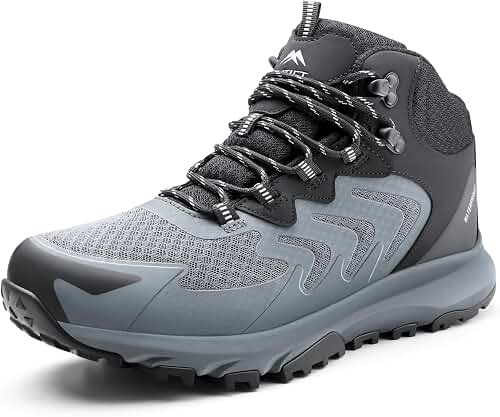
If you have wide feet and you're stuck between the hoka speedgoat 5 vs altra lone peak 7 wide feet debate, here's the short answer: the Altra Lone Peak 7 is the better out-of-the-box pick for genuinely wide forefeet thanks to its foot-shaped "Original" toe box and zero-drop platform, while the Hoka Speedgoat 5 in the Wide (2E) build is the better choice if you want maximum cushion, aggressive Vibram Megagrip traction, and a more structured ride for heavier loads. Both come in wide versions in 2026, both are trail-tested by thru-hikers, and both can work for E and EE feet — but they solve the width problem in completely different ways.
The 30-second verdict
Top Picks
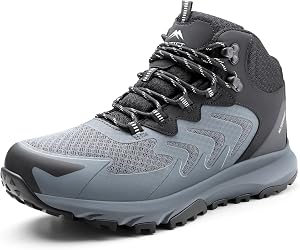
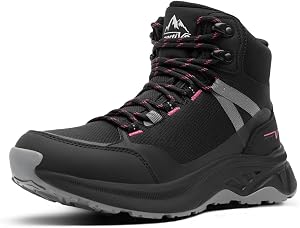
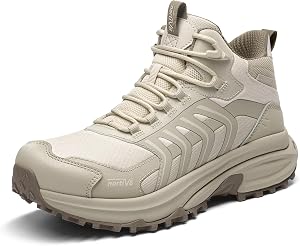
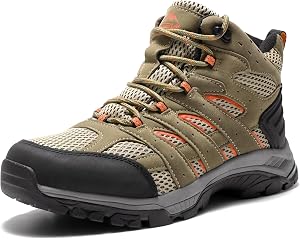
Pick the Altra Lone Peak 7 if your toes feel crushed in every other shoe, you like a flat, ground-feel ride, and you're comfortable with zero drop. Pick the Hoka Speedgoat 5 Wide if you carry a heavier pack, hike technical or rocky terrain, log high mileage days, or have plantar fasciitis and need cushion under the heel. Wide-footed hikers who are coming from cushioned road shoes almost always adapt faster to the Speedgoat 5 Wide; minimalists and toe-splay devotees stay loyal to the Lone Peak 7.
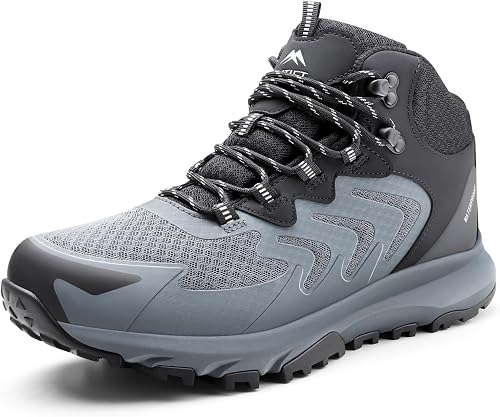
Spec comparison at a glance
| Spec | Altra Lone Peak 7 | Hoka Speedgoat 5 (Wide) |
|---|---|---|
| Weight (men's 9) | 10.6 oz | 10.3 oz |
| Stack height (heel) | 25 mm | 33 mm |
| Heel-to-toe drop | 0 mm (zero drop) | 4 mm |
| Toe box shape | Foot-shaped "Original" | Anatomical, narrower than Altra |
| Wide option | Standard last already roomy; no separate wide SKU needed for most | 2E Wide men's, D Wide women's |
| Outsole | MaxTrac with TrailClaw lugs (4 mm) | Vibram Megagrip with Traction Lug (5 mm) |
| Rock plate | StoneGuard (forefoot) | None — cushion does the job |
| Best for | Day hikes, fastpacking, ultra-distance with light loads | Rugged trails, backpacking, all-day mileage |
| Average street price (2026) | $140 | $160 |
Inside the Altra Lone Peak 7 for wide feet
The Lone Peak 7 is the seventh generation of the shoe that effectively created the modern wide-toe-box hiking category, and Altra didn't mess with the formula. The "Original" foot-shaped last means the widest point of the shoe sits where the widest point of your foot sits — across the metatarsal heads — instead of tapering inward toward the big toe like nearly every other trail shoe. For hikers with bunions, Morton's neuroma, or genuinely wide forefeet (EE+), this is a game changer. Toes splay naturally on downhills, which translates to better balance on scree and far fewer black toenails after a 20-mile day.
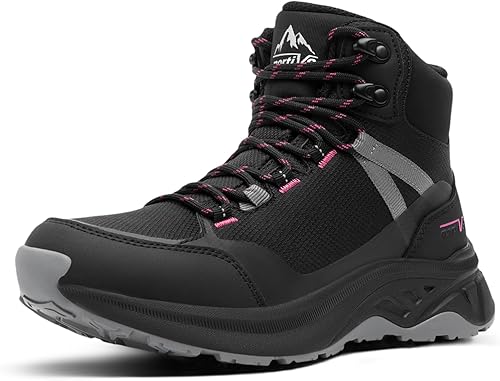
The trade-off is the zero-drop platform. If you're coming from a 10mm drop hiker like a Salomon X Ultra, your calves and Achilles will protest for the first 30-50 miles. The 25mm stack is moderate — enough to take the edge off a long day but not the pillow-on-foot feel of the Hoka. The MaxTrac outsole with 4mm TrailClaw lugs grips dry rock and packed dirt confidently, but it's the weak point against the Speedgoat's Vibram Megagrip on wet roots, slick granite, or mud. Drainage is excellent thanks to the mesh upper, making this the better pick for any trail with frequent stream crossings.
Inside the Hoka Speedgoat 5 for wide feet
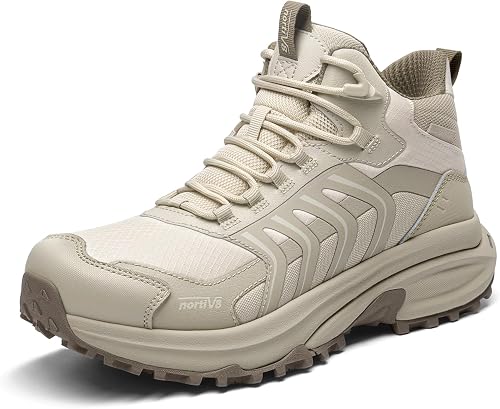
The Speedgoat 5 reset the platform for Hoka's most popular trail shoe — thinner upper, lighter foam (Hoka calls it a new Pebax-based EVA blend), more aggressive 5mm Vibram Megagrip lugs, and crucially for our discussion, a roomier toe box than the Speedgoat 4. The standard D-width version is now genuinely usable for medium-to-wide feet, and the 2E Wide adds another 4-5mm across the forefoot. For most hikers in the D/E range, the Wide is the sweet spot — still locked-down through the midfoot but with room to spread when you're 15 miles in and your feet have swollen half a size.
What you really pay for with the Speedgoat is the cushion. The 33mm heel stack with the rocker geometry creates a smooth, almost rolling gait that protects your joints on long descents and lets you keep hammering pace into hour eight. The Vibram Megagrip outsole is the gold standard in trail traction — sticky on wet rock, decisive on loose gravel, confident on roots. The downside: you lose ground feel, which matters on technical scrambles where you actually want to read the rock. And while the forefoot is wide, the toe box still tapers more than the Altra — hikers with very wide forefeet or those used to true foot-shaped lasts will notice.
Head-to-head: which is actually wider?
This is the question that drives the entire hoka speedgoat 5 vs altra lone peak 7 wide feet comparison, so let's be precise. Measured at the widest point of the forefoot in a men's size 10:
- Altra Lone Peak 7 (standard): approximately 105 mm internal width
- Hoka Speedgoat 5 Wide (2E): approximately 102 mm internal width
- Hoka Speedgoat 5 standard (D): approximately 97 mm
So in raw forefoot width, the Altra's standard last beats even the Hoka Wide by about 3 mm — and the shape difference matters even more. The Altra is squared off at the toes (foot-shaped); the Hoka is rounded with a slight taper toward the big toe. If you have wide feet AND long toes, the Altra wins almost every time. If you have wide feet but more conventionally proportioned toes, the Speedgoat 5 Wide is plenty roomy and gives you the cushion advantage.
Terrain matchups
Rocky, technical trails (Sierra granite, Whites, Rockies): Speedgoat 5 Wide. The cushion, rock protection, and Vibram outsole are worth the slight width compromise.
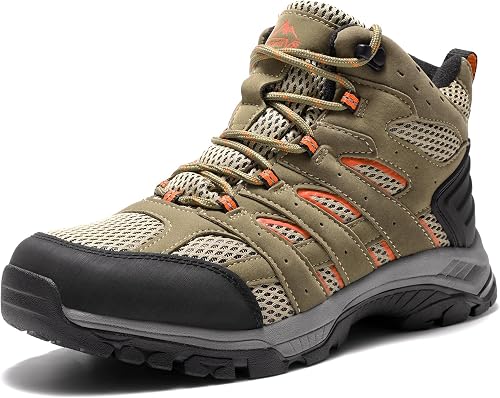
Soft dirt, PCT-style tread, fast hiking: Lone Peak 7. Lighter feel, better drainage, foot-shaped freedom on long days. This is why it's still the most-seen shoe on the Pacific Crest Trail.
Wet, muddy, slick conditions: Speedgoat 5 Wide. Vibram Megagrip is meaningfully better than MaxTrac in the wet.
Ultra-distance and fastpacking: tie, with personal preference winning. If you're conditioned to zero drop, the Lone Peak 7 is unbeatable for foot health over 50+ mile efforts. If you need the cushion to survive, the Speedgoat 5 Wide.
Durability honesty check
Neither shoe is a 1,000-mile workhorse. Realistic outsole life for both:
- Lone Peak 7: 400-500 miles before the MaxTrac lugs round off, with upper blowouts (especially at the flex point above the pinky toe) being a known concern. Altra acknowledged this and reinforced the upper for the 7, but it's still the weak link.
- Speedgoat 5 Wide: 500-600 miles. The Vibram Megagrip outsole holds up better, and the more structured upper resists blowouts. The midsole foam softens noticeably after about 400 miles.
If you're rotating two pairs, both will last a full thru-hike season. If this is your only shoe, the Speedgoat 5 Wide gives you a bit more mileage per dollar.
Who should buy which
Buy the Altra Lone Peak 7 if: you have EE+ feet, long toes, bunions, or a history of black toenails; you're an experienced zero-drop hiker; you prefer ground feel; you primarily hike non-technical terrain or thru-hike at conversational pace.
Buy the Hoka Speedgoat 5 Wide if: you have wide feet but conventional toe proportions; you hike with a 25+ lb pack; you have any plantar fasciitis, knee pain, or joint sensitivity; you tackle technical, rocky, or wet terrain; you're coming from cushioned road shoes and don't want a long adaptation period.
Still undecided? Read our breakdowns of the best trail shoes for flat and wide feet in 2026 and how to prevent blisters on long hikes — width is only half the equation; sock pairing and lacing technique do the rest.
Complete your wide-foot hiking kit
The right shoe is step one. Pack weight and load distribution affect how your feet swell and splay over a long day — a heavier or poorly fitted pack will undo the benefits of any wide-toe-box shoe by hour six. Here are three daypacks that pair well with either the Lone Peak 7 or Speedgoat 5 Wide, depending on your trip profile.
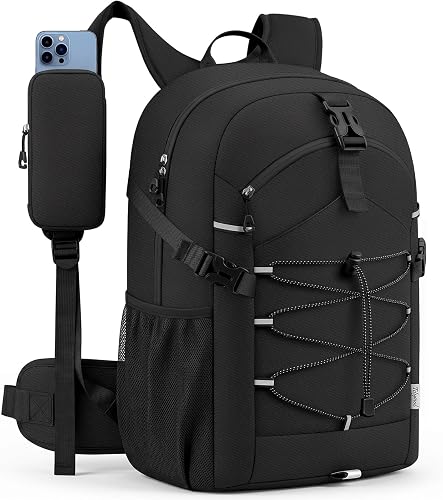
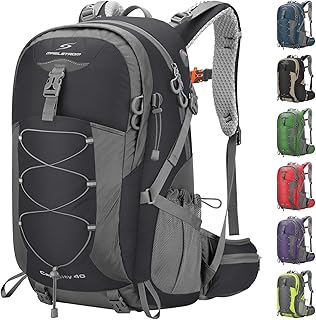
Maelstrom 40L Waterproof Hiking Daypack — best for overnighters and heavy day kits
If you're doing the kind of mileage where the Speedgoat 5's cushion earns its keep, you probably need more capacity. The Maelstrom 40L gives you genuine overnight or fastpacking volume with a real rain cover, comfortable load-bearing straps, and a frame that transfers weight to your hips so it doesn't crush your forefoot into the shoe. The waterproof construction is the killer feature for Pacific Northwest or shoulder-season hikers. Check current pricing on Maelstrom Hiking Backpack,Camping Backpack,40L Waterproof Hiking Daypack with Rain Cover,Lightweight Travel Backpack,Black.
25L Lightweight Waterproof Hiking Daypack — best for everyday trail use
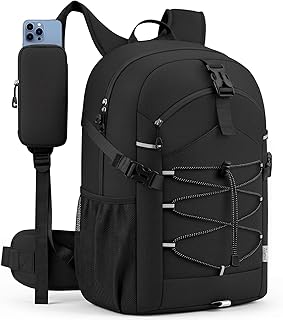
For most day hikes in the 8-15 mile range, 25 liters is the sweet spot — enough for water, layers, food, first aid, and a camera without tempting you to overpack. This one weighs under two pounds, has a waterproof exterior, and the slim profile keeps weight close to your back, which preserves balance on technical sections where you really need the Speedgoat's Vibram or the Lone Peak's ground feel. See it on Hiking Travel Backpack for Men Women 25L.
MIYCOO Ultra-Lightweight Packable Hiking Backpack — best as a summit or stash pack
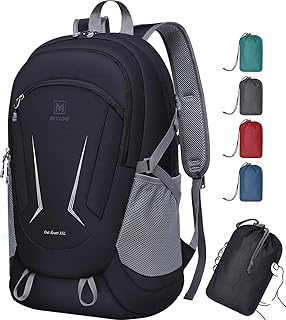
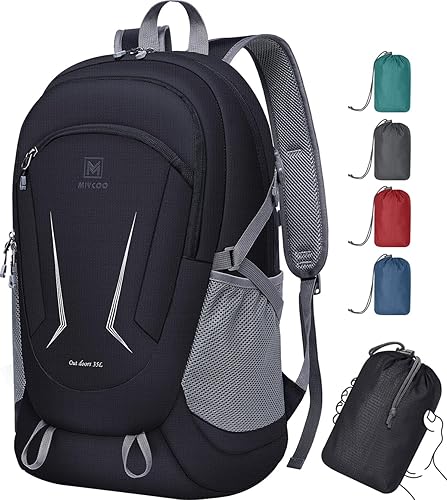
Pairs especially well with the Lone Peak 7 ethos: light, fast, minimal. This packs down small enough to live inside a larger pack as a summit bag, or to throw in your car as a backup. At under a pound it disappears on your back, making it the natural choice for fastpacking and ultra-distance days where every ounce on your shoulders translates to more energy in your legs. Grab the MIYCOO Backpack - Ultra Lightweight Packable Backpack for Travel Camping, Hiking Back Pack Waterproof Foldable Daypack for Men Women Black.
Round out the kit with proper poles — our guide to the best trekking poles for knee pain in 2026 covers folding versus telescoping models and which weights pair best with cushioned shoes like the Speedgoat 5.
Frequently Asked Questions
Is the Hoka Speedgoat 5 Wide actually wider than the standard Speedgoat 5?
Yes, meaningfully so. The 2E Wide men's version adds about 4-5 mm across the forefoot compared to the standard D width, and the toe box volume is taller as well. If you found the Speedgoat 4 too narrow, the Speedgoat 5 Wide is the shoe that finally fits. Note that the women's wide is a D width, not 2E.
Do I need the wide version of the Altra Lone Peak 7?
For most hikers, no. The standard Lone Peak 7 in the "Original" foot-shape last is already roomier in the forefoot than most competitors' wide versions. Altra does offer a wider "Slim" and "Original" distinction in some models, but for the Lone Peak 7 the standard width works for the vast majority of wide-footed hikers up to about EE. True EEE+ feet should look at Topo Athletic Terraventure or the Altra Olympus for even more room.
Which shoe is better for plantar fasciitis with wide feet?
The Hoka Speedgoat 5 Wide, almost universally. Zero-drop platforms like the Lone Peak 7 require strong, conditioned plantar fascia and calves; if you have active PF, you'll likely aggravate it. The Speedgoat's 4mm drop, 33mm stack, and rocker geometry reduce strain on the fascia and let you keep hiking while you rehab.
Can I thru-hike the Appalachian Trail in either of these for wide feet?
Yes, and both are common AT shoes. The wet, rocky northeast (especially Pennsylvania and the Whites) favors the Speedgoat 5 Wide for traction and rock protection. The softer southern half of the trail is friendlier to the Lone Peak 7. Most AT thru-hikers go through 3-5 pairs regardless of brand, so many rotate between the two depending on terrain.
How long does it take to adapt to zero drop if I switch to the Lone Peak 7?
Plan on 4-6 weeks of gradual transition. Start with short walks (1-3 miles), let your calves and Achilles adapt, and don't jump straight into a 15-mile day in a new pair. Many hikers find that doing strength work — calf raises, single-leg balance, foot intrinsic exercises — cuts the adaptation window in half.
Are these shoes okay for hikers with bunions?
The Altra Lone Peak 7 is the better choice for bunions because the foot-shaped toe box doesn't press against the bunion bump the way a tapered shoe does. The Hoka Speedgoat 5 Wide is workable but the slight medial taper can irritate the bunion on long days. If bunions are your primary issue, Altra wins.
Will either shoe work for backpacking with a 35+ pound pack?
The Speedgoat 5 Wide handles heavier loads better thanks to the structured midsole and more supportive upper. The Lone Peak 7 can do it but you'll feel the load through the thinner stack, especially on descents. For loads above 40 pounds, consider a true mid-cut hiker like the Altra Lone Peak All-Wthr Mid or a Hoka Anacapa Mid — ankle support starts mattering at that weight regardless of foot width.
Bottom line on hoka speedgoat 5 vs altra lone peak 7 wide feet?
Altra Lone Peak 7 for maximum toe splay, natural ride, and lightweight hiking. Hoka Speedgoat 5 Wide for cushion, traction, and rugged terrain. Both solve the wide-feet problem better than 95% of the market — the right pick depends on what kind of hiker you are, not which shoe is objectively "better."
Key Takeaways
- Choosing the right hoka speedgoat 5 vs altra lone peak 7 wide feet means matching the key features to your specific needs and budget
- Read real customer reviews and check the return policy before you commit
- Also covers: speedgoat 5 vs lone peak 7 width
- Also covers: altra lone peak wide toe box
- Also covers: hoka speedgoat wide foot hiker
- Compare value across models — the priciest option is not always the best fit