If you're weighing the Osprey Talon 22 vs Deuter Speed Lite 23 for canyoneering day trips, the short answer in 2026 is this: the Deuter Speed Lite 23 wins for tight slot work and stemming thanks to its narrow profile and minimal hip belt, while the Talon 22 wins for longer approach hikes and heavier water loads because of its AirScape back panel and pre-curved BioStretch hip belt. Neither is a true technical canyoneering pack — both will scuff against sandstone — but for non-technical to mid-grade canyons like the Subway, Pine Creek, or Birch Hollow, one of these two is almost always a smarter call than dragging a 30L haul bag into the slot.
Quick verdict at a glance
Both packs live in the 22–23 liter range and weigh under 2 lbs, but they solve different problems. Here's the side-by-side most canyoneers actually care about:
When shopping for Osprey Talon 22 vs Deuter Speed Lite 23 for canyoneering, it pays to compare specs, capacity, and real-world runtime before committing.
| Spec | Osprey Talon 22 (2026) | Deuter Speed Lite 23 (2026) |
|---|---|---|
| Capacity | 22 L | 23 L |
| Weight (size M) | 1.94 lbs (880 g) | 1.34 lbs (610 g) |
| Back panel | AirScape ridged foam | Delta-Lite mesh + foam strips |
| Hip belt | Padded, removable | Webbing only |
| Hydration sleeve | 2.5 L compatible | 3 L compatible |
| Trekking pole attach | Stow-on-the-Go | Side compression loops |
| Main fabric | 100D / 420D HD nylon | 210D recycled polyamide |
| Helmet carry | External LidLock | Front bungee only |
| Best for | Long approaches, heavy water | Slot canyons, scrambling |
How they actually feel on a canyoneering day
Spec sheets only tell you so much. What matters is what each pack does the moment you start stemming, downclimbing, and crawling through breakdown.
Fit and torso wrap
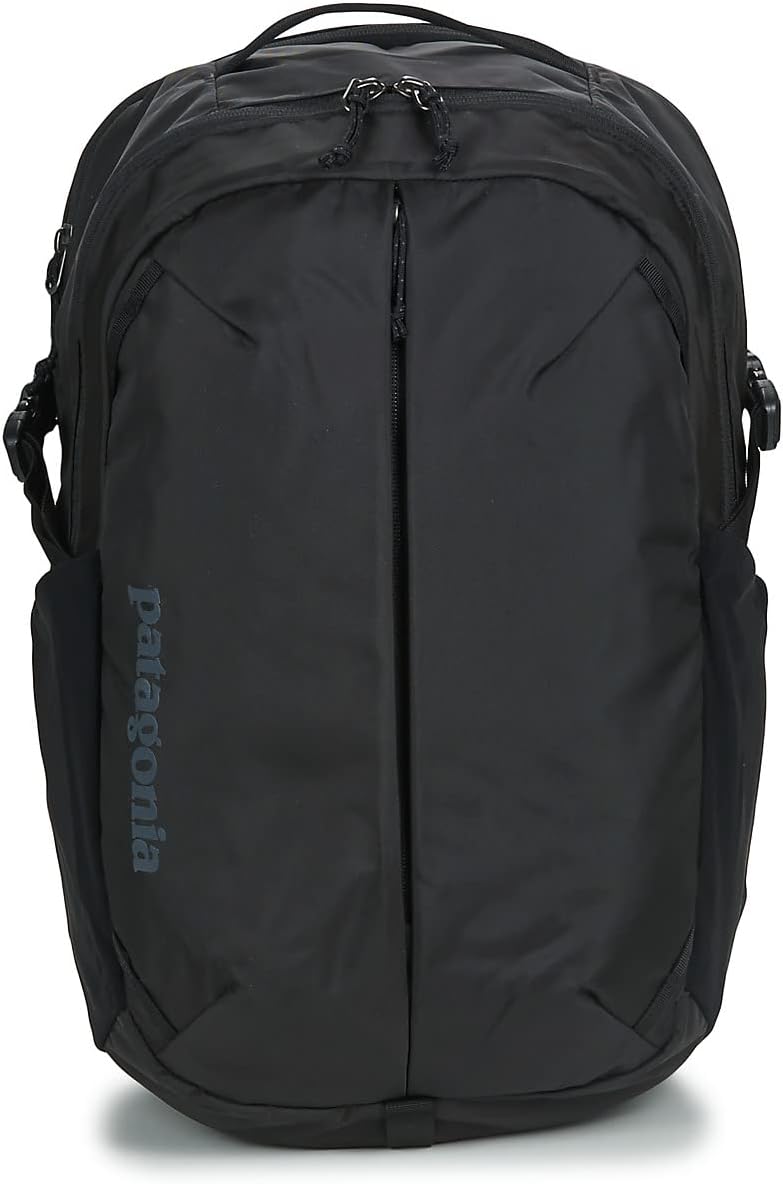
The Osprey Talon 22 is the more supportive pack. Its pre-curved BioStretch hip belt actually transfers a meaningful chunk of weight to your hips, which matters when you're hauling 4–5 liters of water through a desert approach. The downside is that the hip belt and back panel both add bulk, so the pack stands proud off your back. In a tight slot, that extra inch of profile turns into snags and scrapes against the walls.
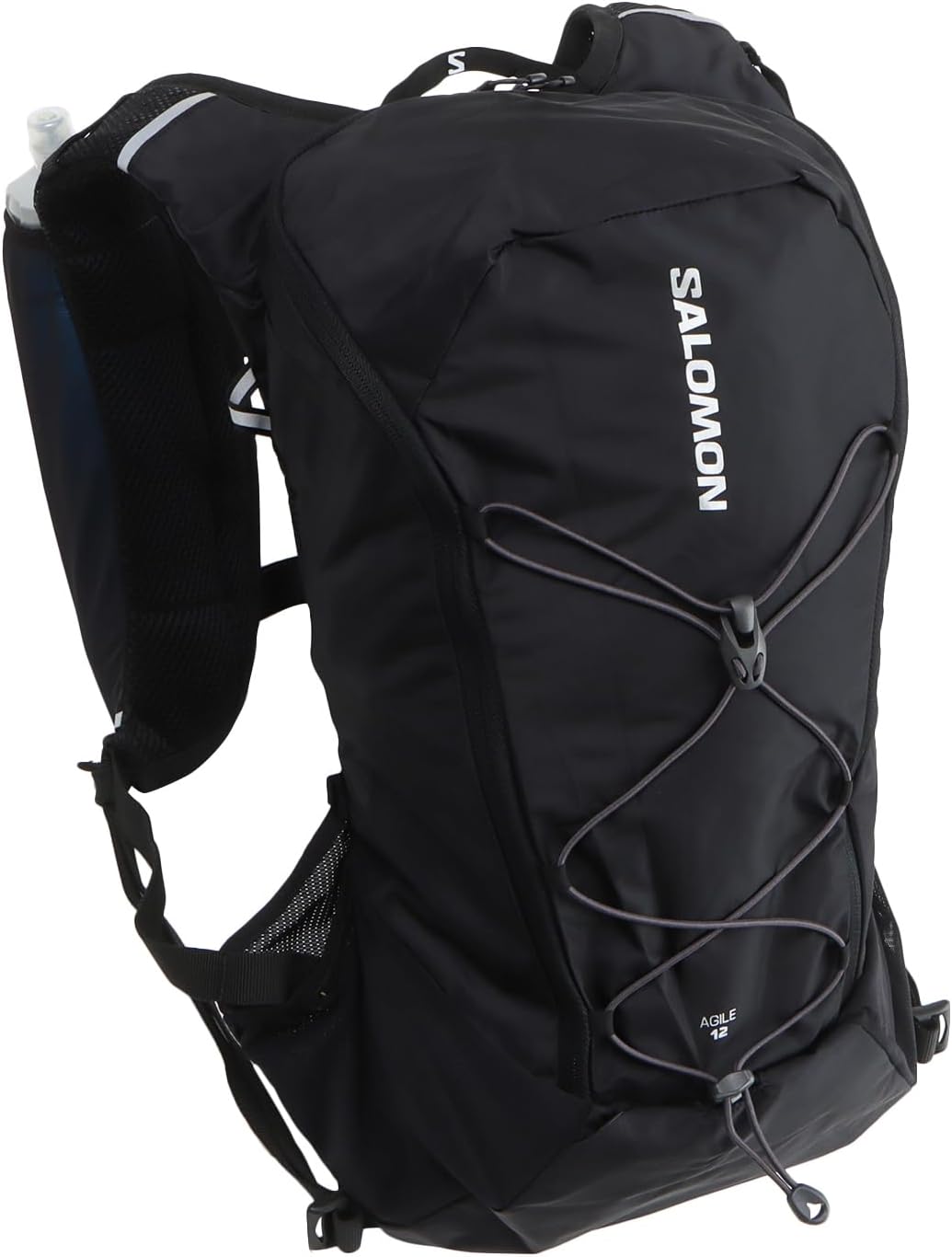
The Deuter Speed Lite 23 hugs the body. The webbing hip belt isn't load-bearing, but it locks the pack against your lumbar so it doesn't swing when you stem across a narrow corridor. For canyons where you're constantly pressing your back against rock, that snug fit is the bigger win.
Abrasion and sandstone wear
This is where people get burned. Neither pack uses canyoneering-grade fabric. The Talon's 100D nylon body is lighter but tears faster against sharp Navajo sandstone — expect visible wear after 8–10 canyons. The Speed Lite's 210D recycled polyamide is a bit more abrasion-tolerant but still pills and fuzzes quickly. If you're doing weekly trips in Zion or the Escalante, neither will last more than a season or two of hard use.
Real talk: budget for a dedicated canyon pack (Imlay Canyon Gear, Black Diamond Creek Freak) once you're past 20 trips a year. Until then, the Talon or Speed Lite is the right move.
Water carry and hydration
The Speed Lite 23 fits a 3L reservoir cleanly; the Talon 22 maxes out around 2.5L without crowding the main compartment. For long, hot approaches in southern Utah or the Grand Staircase, that extra half-liter matters. The Talon does have two stretch-mesh side pockets that hold 1L bottles upright while moving — the Speed Lite's side pockets are shallower and tend to spit bottles when you bend forward over a downclimb.
Rope, harness, and helmet stash
For non-technical canyons where you're carrying a 30m rope, both packs handle it inside the main compartment. The Osprey's LidLock helmet clip is a genuine advantage for the approach — clip the helmet to the outside, free up volume for rope and webbing. The Speed Lite's front bungee will hold a helmet but it's less secure on bushwhacks through manzanita or oak brush.
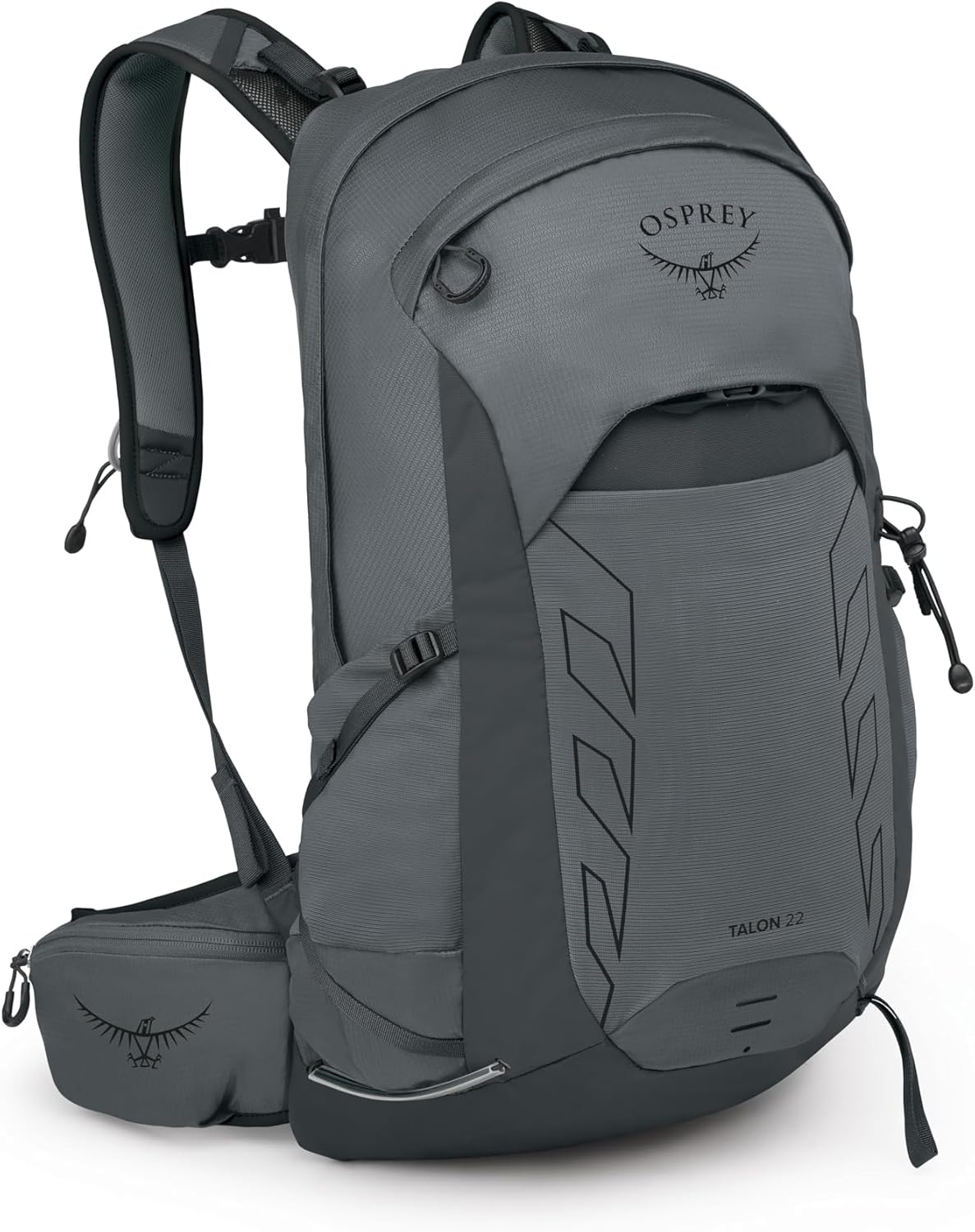
Neither pack has gear loops, ice axe attachments, or daisy chains designed for canyoneering hardware. If you carry a harness with multiple biners and rappel devices clipped on, you'll want to stash it inside or accept that things will dangle and clank.
When the Osprey Talon 22 is the better pick
Pick the Talon 22 when:
- Your approach is 3+ miles with elevation gain (the hip belt earns its keep)
- You're carrying 3L+ of water plus food
- The canyon is wide enough that pack profile isn't critical (Spry, Keyhole, Pine Creek)
- You sometimes use the same pack for non-canyon day hikes
- You're between 5'8" and 6'2" — the Talon's sizing range is more forgiving
The Talon is also the better choice if you're new to canyoneering and want one pack that can pull double duty for backcountry trail days. Pair it with proper footwear — our 2026 canyoneering shoe roundup covers what actually grips wet sandstone.
When the Deuter Speed Lite 23 is the better pick
Pick the Speed Lite 23 when:
- You're doing narrow slots where pack profile matters (Subway top-down, Birch Hollow, Heaps)
- Approach is short (under 2 miles) so hip support is less critical
- You want the lightest possible pack on your back during stemming
- You already have a hydration-only running vest for shorter days and want a step up
- You're under 5'8" — the Speed Lite's shorter back length fits smaller torsos better
It's also the smarter buy if you mostly canyoneer in the warmer months when you're carrying less insulation. The minimalism becomes a feature, not a limitation.
Budget-friendly alternatives worth a look
The Talon and Speed Lite both run $130-$160 in 2026. If you're testing the waters on canyoneering before committing, or you want a beater pack you don't mind shredding on sandstone, three Amazon options punch above their price.
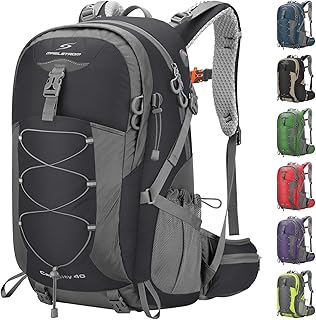
Maelstrom 40L Waterproof Hiking Daypack with Rain Cover
At 40L, this is overkill for most day canyons but genuinely useful when you need to haul a wetsuit, a longer rope (60m), and extra layers for cold-water canyons in spring or fall. The included rain cover doubles as a dry-bag wrapper for electronics in semi-aquatic canyons, and the heavier 600D polyester body resists sandstone abrasion noticeably better than either the Talon or Speed Lite. The hip belt is real padded support, not webbing. The downside is weight — at 2.4 lbs empty, this isn't a fast-and-light pack. Best for slower-paced groups or cold-weather trips where the volume earns its keep. Check current price on Amazon.
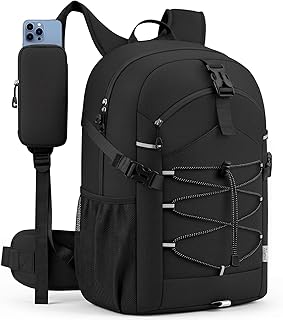
25L Lightweight Waterproof Hiking Daypack
This is the closest direct competitor to the Speed Lite 23 in the budget category. At 25L it's actually slightly more capacious than either flagship, but it sits in the same minimalist weight class. The water-resistant coating (not fully waterproof — nothing breathable truly is) helps when you're dropping the pack on wet ledges. Mesh side pockets accommodate a 1L Nalgene without spitting it during downclimbs. It won't last as long as the Deuter, but at the price point, replacing it after a season is no big deal. Check current price on Amazon.
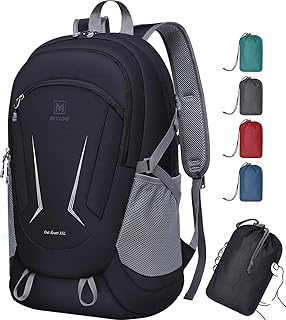
MIYCOO Ultra-Lightweight Packable Hiking Backpack
This one earns its place as a secondary pack rather than a primary canyoneering bag. It folds into its own pocket, weighs almost nothing, and is what you stash in the trunk for "if we end up adding a hike to the day." Useful as a summit bag tucked inside your main canyon pack, or as a stash bag for the car shuttle leg of long routes like Heaps. Don't expect it to survive sandstone — it won't — but for under twenty bucks it solves a real logistical problem. Check current price on Amazon.
The verdict on Osprey Talon 22 vs Deuter Speed Lite 23 for canyoneering
If we had to pick one and walk away: Deuter Speed Lite 23 for technical slot canyons, Osprey Talon 22 for everything else. The Speed Lite's narrower profile and lower weight are real advantages in tight terrain, while the Talon's hip belt and back panel actually matter on longer approaches in southern Utah heat. Neither is a substitute for a true canyon pack like the Imlay or Black Diamond Creek series once you're going hard year-round — but for the first 1–2 years of canyoneering, either of these will do the job without buyer's remorse.
If you're still building your kit, the pack is only one piece. Equally important: a hydration bladder that won't burst on the first stem (see our hydration bladder guide) and trekking poles short enough to stow without snagging (covered in our 2026 slot canyon pole roundup).
Frequently Asked Questions
Is the Osprey Talon 22 waterproof enough for wet canyons?
No. The Talon 22 uses bluesign-approved nylon with a DWR coating, but the coating wears off quickly on sandstone and the seams aren't taped. For any canyon involving swimmers or repeated immersion, line the inside with a 20L dry bag or rely on individual dry sacks for electronics, layers, and food. Treat the pack itself as a porous shell, not a barrier.
How long does the Deuter Speed Lite 23 last in actual canyoneering use?
Realistically, 30–50 canyons of moderate use before visible wear becomes performance-affecting. The 210D recycled polyamide on the 2026 model is more abrasion-resistant than the older 175D version, but it's not on par with the 1000D or VX-21 fabrics used in dedicated canyon packs. Expect to retire it after about two seasons of frequent use, or sooner if you favor sharp-walled Navajo sandstone slots.
Can I rappel with a rope inside either pack?
Yes, for ropes up to 60m and 9mm diameter, both packs swallow a coiled rope inside the main compartment. The Talon 22 has slightly more usable volume due to its boxier shape. For 70m ropes or fatter 10.5mm static ropes, you'll need to lash the rope externally — neither pack has dedicated rope-keeper straps, so use the side compression straps with a short section of webbing as a backup tie.
Which pack carries a wetsuit better for cold canyons?
The Osprey Talon 22 has slightly better wetsuit packability because its back panel compresses better against the bag's contents. For a 3mm shorty, both work fine. For a 5mm full suit, neither is ideal — consider the 40L Maelstrom alternative above or step up to a dedicated 30L+ canyoneering pack like the Imlay Spry for late-season cold canyons.
Are trekking poles useful for canyoneering approaches?
Absolutely for any approach over 2 miles with elevation gain. Both packs attach poles, but the Talon's Stow-on-the-Go system lets you ditch them mid-stride without removing the pack — useful when you transition from approach to canyon entry. Once you're in the canyon, poles get stashed inside or strapped tight to side compression so they don't catch on overhangs.
Is the Talon 22 or Speed Lite 23 better for women?
Osprey makes the Tempest 22 (women's version of Talon) and Deuter makes the Speed Lite 21 SL (women's version of Speed Lite 23). Both use shorter back lengths and narrower shoulder straps with reshaped hip belts. For canyoneering specifically, the Tempest 22 wins for the same reasons the Talon does — better load carry on long approaches. The Speed Lite SL versions still win for tight slots and shorter approaches.
What size hydration bladder fits in each pack?
The Talon 22 cleanly accepts up to a 2.5L bladder; squeezing a 3L in works but eats main compartment volume. The Speed Lite 23 fits a 3L bladder comfortably without compromise. For multi-hour canyons in Utah summer heat, 3L is the minimum you should carry — which is a quiet but real point in the Deuter's favor when temperatures break 95°F.
Key Takeaways
- Choosing the right Osprey Talon 22 vs Deuter Speed Lite 23 for canyoneering means matching capacity and output ports to your actual devices
- Always check actual watt-hours (Wh), not just watts — runtime depends on Wh, not peak output
- Also covers: Osprey Talon 22 canyoneering review
- Also covers: Deuter Speed Lite 23 comparison
- Also covers: canyoneering daypack
- Compare price-per-Wh across models to find the best value for your budget